


B1-certified molton fabrics for stage, trade shows and event production
Flame-retardant molton fabrics in stage quality – available from stock or custom-made: stage molton, deco molton and satin molton in various weights, colours and widths – for theatres, exhibition construction, event installations and temporary space solutions.
TÜCHLER bietet ein umfangreiches Sortiment flammhemmender Moltonstoffe für Bühnen, Messebau, Studios und Markeninstallationen. Von standardisiertem Bühnenmolton bis hin zu spezialisierten Produkten wie Wollserge oder Satinbolton stehen geprüfte, sofort verfügbare Materialien zur Auswahl. Die Stoffe sind nach B1 bzw. EN 13501-1 zertifiziert, als Meterware oder Fertigformaten lagernd und online bestellbar oder werden auftragsbezogen konfektioniert.
-
STAGE MOLLETON FR 300cmmore...
1001612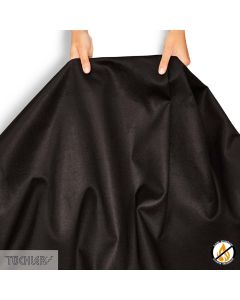
-
STAGE MOLLETON FR 200cmmore...
1001620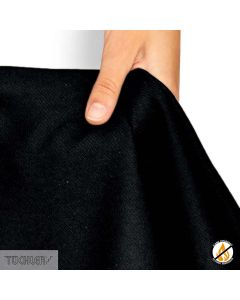
-
STAGE MOLLETON ECO FR 300cmmore...
1001630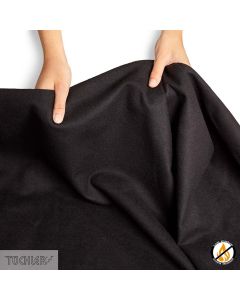
-
STAGE MOLLETON PREMIUM FRmore...
1001616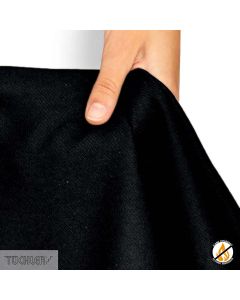
-
STAGE MOLLETON WPmore...
1001640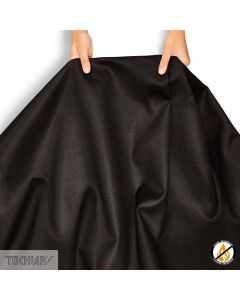
-
SATIN MOLLETON FRmore...
1001645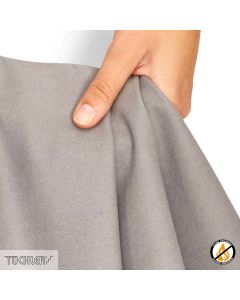
-
STAGE MOLLETON LIGHTmore...
1001795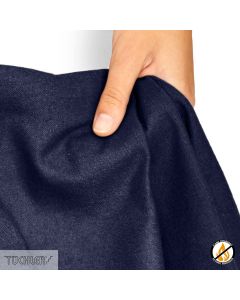
-
STAGE MOLLETON GREEN SCREENmore...
1001615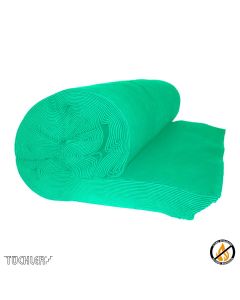
-
CHROMAKEY SCREENmore...
1001690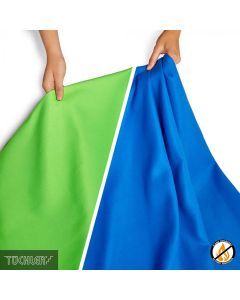
-
DISPLAY MOLLETON FR 130CMmore...
1001629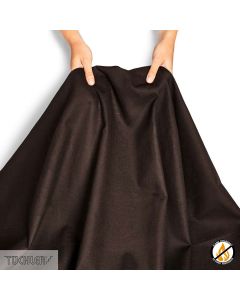
-
DISPLAY MOLLETON FR 300cmmore...
1001681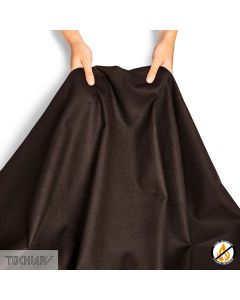
-
DEKOBOLTON FR 260cmmore...
1001685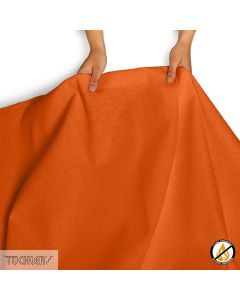
-
ROLL MOLLETON NO EDGE, ONLY CUT FRmore...
1001628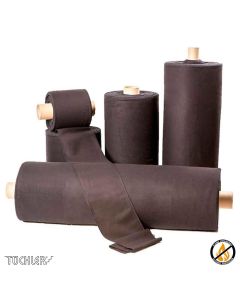
-
ROLL MOLLETON OVEREDGE SEAMED FRmore...
1001618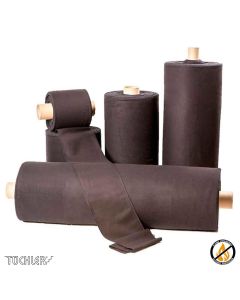
-
STAGE MOLLETON READY TO USE, PRODUCTION TYPE 0more...
980200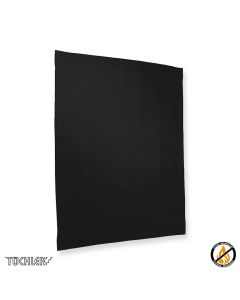 STAGE MOLLETON READY TO USE, PRODUCTION TYPE 0from 10 pcs €153.84 €128.20
 -
STAGE MOLLETON READY TO USE, PRODUCTION TYPE 1more...
980201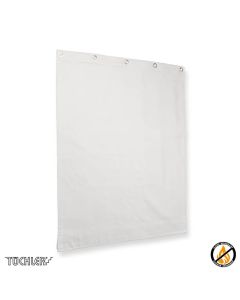 STAGE MOLLETON READY TO USE, PRODUCTION TYPE 1from 10 pcs €318.96 €265.80
 -
STAGE MOLLETON READY TO USE, PRODUCTION TYPE 2more...
980202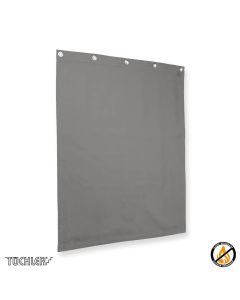 STAGE MOLLETON READY TO USE, PRODUCTION TYPE 2from 10 pcs €175.68 €146.40
Molton Fabrics B1: Stock Items or Made-to-Measure
TÜCHLER offers molton fabrics in several versions: stage molton, deco molton, and complementary stage textiles for special requirements. Depending on the version, test certificates according to DIN/EN are available—particularly for use in public event spaces, temporary installations, and exhibition construction.
Products are available cut by the meter from stock (standard widths and colors) or as made-to-measure confection from our in-house workshop—including cutting, fabrication, and documentation for project acceptance and operator obligations.
Typical Applications:
- Event production & touring: backdrops / stage backgrounds, side wings, technical masking
- Exhibition construction & brand spaces: room dividers, drapes, ceiling and wall surfaces
- Theatre & studio: curtains, portals, light control and shielding
- Temporary architecture: cabins, visual screening, blackout and partitions
Stage Molton B1: The Standard for Backdrops, Masking & Blackout
Stage molton is the robust standard molton fabric for stage, trade fair, and event applications: a matte surface, good handling, and proven performance for masking and blackout. For classic applications, we recommend stage molton B1 300 cm; when a cost-optimized option is required, stage molton ECO B1 300 cm is a suitable choice.
Especially in black, stage molton is widely used as black molton B1 for backdrops, side wings, and technical masking.
Typical Applications for Stage Molton
- Cost-effective curtains and drapes
- Podium skirts, front and edge coverings
- Frame coverings (e.g. 2 m / 3 m widths)
- Blackout on a limited budget
- Practical notes:
Molton is an industrial product—manufacturing tolerances and batch-related color variations are possible. Under UV exposure, color stability is limited. For projects with very high visual requirements (deepest black, batch consistency, low fiber shedding), alternative fabrics are often the better choice (see below).
Deco Molton B1: The Lightweight Solution for Fast Decorations
Deco molton is a lightweight molton fabric for fast, cost-effective decoration and covering applications where full blackout is not the primary requirement. For large areas, deco molton B1 300 cm is particularly practical, while deco molton B1 130 cm is suitable for narrower applications or details.
If a highly light-absorbing, low-reflection surface is required, black molton B1 (or heavier stage molton) is usually the more suitable choice.
When Deco Molton Is the Ideal Choice:
- Short-notice trade fair and event decoration
- Covering surfaces without backlighting
- Simple space design, CI color areas, temporary installations
- When not the first choice:
For demanding blackout applications, high mechanical stress, or a very matte “black box” look, stage molton or specifically black molton B1 is usually the better option.
Roll Molton B1: Fast Installation Thanks to Finished Widths – No Cutting, No Fold Marks
Roll molton is a practical molton fabric solution for fast setups in touring, trade fair, and event operations. Thanks to finished widths in various versions—starting from 20 cm—the molton is already adapted to the required width or height, saving time-consuming cutting, for example to stage height. The edges are cleanly finished, either cut (as with roll molton cut B1) or machine overlocked (as with roll molton overlocked B1), which prevents fraying and makes the material ready for immediate installation.
Because roll molton is supplied and stored on rolls, no fold marks occur as with folded goods—making it ideal for short-notice installations and a fast, clean appearance.
Roll Molton: Finished Widths from 20 cm, Overlocked Edges, No Fold Marks
Roll molton is an installation-ready molton fabric supplied in finished widths (from 20 cm). Clean-cut, overlocked edges eliminate the need for cutting (e.g. to stage height) and make fast setups easier. Thanks to the roll delivery, there are no fold marks—which is why it is especially popular as black molton B1 for:
- low-reflection stage skirts
- table coverings
- stage edge masking
- railing covers
Molton Fabrics at a Glance: Weights, Widths, Colors, Variants
In the event industry, molton fabric is generally understood to be a brushed textile used for matte surfaces, light control, and masking. At TÜCHLER, molton is available in several variants—matched to the required function, budget, and desired appearance.
Key Selection Criteria:
- Fabric weight: the higher the weight, the denser and more robust the fabric—and usually the better the blackout performance
- Width: affects seam appearance, confection effort, and overall look
- Color: black/dark grey for light control; colors for brand spaces and scenography
- Duration of use: touring vs. permanent operation (UV exposure, soiling, cleaning)
- Fiber shedding: relevant for studios and audience-facing areas
Black Molton B1: Low-Reflection, Light-Absorbing, Proven
Black Molton B1 is used whenever a highly matte, light-absorbing surface is required—e.g. for stage backdrops, side wings, technical masking, and temporary blackout. As a black molton fabric, it reduces reflections and stray light and supports a “black box” effect in stage and exhibition environments.
Planning note:
If a project requires exact color consistency across multiple batches, very high UV exposure resistance, or particularly low fiber shedding, it is worth considering satin molton / satin bolton, wool serge, or dedicated curtain and blackout fabrics such as SunSat2016, SubBlock Soft, or SunStop.
Alternatives to Molton: Satin Molton (Satin Bolton), Deco Bolton & Wool Serge
For applications where a molton fabric with lower fiber shedding or a finer surface is required (e.g. studios or audience-facing areas), satin molton B1 is a proven alternative to classic molton or stage molton.
Satin molton: (technically: satin bolton): single-sided brushed, denser and visually finer; reduced fiber release, suitable for longer service life and audience-facing areas.
Deco bolton: single-sided brushed, lighter than satin molton; good color selection for scenographic and CI surfaces.
Wool serge: high acoustic performance, very matte appearance, low wrinkling; suitable for high-quality curtains and acoustically effective installations.
Deco Bolton – Single-Sided Brushed and Available in a Wide Range of Colors
Deco bolton, like satin molton, is a bolton—that is, a fabric brushed on one side only. Compared to satin molton, however, the base fabric is significantly lighter and less dense.
Deco bolton is particularly suitable for decorative applications where budget and design flexibility are equally important. It is available in a wide range of colors and offers a matte surface at low weight. Typical uses include stage sets, scenographic applications, and temporary event spaces with a defined color concept.
Made-to-Measure Manufacturing & Sewing Service: Ready-to-Use Solutions
In addition to cut-by-the-meter goods, TÜCHLER manufactures molton, stage molton, and deco molton made to measure (eyelets, sleeves, Velcro, weighting, special shapes) – installation-ready for stage, trade fairs, and temporary space solutions.
When speed is critical, we recommend ready-made molton curtains (B1) available from stock.
Typical made-to-measure products:
- Curtains with eyelets, sleeves, Velcro, weighting
- Wall and ceiling coverings
- Podium and truss masking
- Textile special shapes / 3D installation
- For tenders & approvals:
On request, supplied with documented material data, care/cleaning information, and the appropriate test certificates depending on the version.
Would you like to place an order directly or need a technical recommendation?
Use our technical consulting service or order online by width, weight, and color.
FAQ zu Moltonstoffen B1 für Bühne, Messe und Eventproduktion
FAQ – Optimized (EN)
1. What does “Molton B1” mean?
“B1” is the traditional German classification for “flame retardant” (DIN 4102). Today, many projects also refer to EN standards. Depending on the version, TÜCHLER supplies molton and molton fabrics with the appropriate test certificates according to DIN/EN.
2. What is the difference between stage molton and deco molton?
Stage molton is heavier, denser, and more robust—ideal for cladding and blackout applications. Deco molton is lighter, more economical, and better suited for decoration and covering where full light blocking is not required.
3. Is deco molton suitable for blackout purposes?
Deco molton is only partially opaque. For strong light control, stage molton or specifically black molton B1 is recommended (depending on project requirements).
4. What is “molton fabric” – is it different from molton?
In the event industry, “molton fabric” is often used as a generic term for molton qualities (e.g. stage molton, deco molton). What matters are weight, weave, brushing, and the specific application.
5. What are the most common uses of stage molton?
Curtains, stage backdrops, podium skirts, technical masking, frame coverings, and basic blackout applications. For mobile setups, molton is also frequently used as roll molton, as it has no fold marks and can be installed more quickly in suitable widths.
6. What is black molton B1 particularly suitable for?
Black molton B1 is ideal for matte, low-reflection stage surfaces, backdrops, side wings, technical masking, and temporary blackout.
7. Is black molton B1 “completely lightproof”?
The level of blackout depends on fabric weight, installation (overlaps, pleating), the light source, and distance. For maximum light control, black molton B1 is usually the first choice—but complete lightproofing can only be achieved with special fabrics.
8. Are there quality differences in stage molton?
Yes. Depending on composition, origin, and manufacturing, appearance and batch consistency can vary. For projects with strict visual requirements, sampling is recommended.
9. What is satin molton – and why is it also called satin bolton?
Satin molton is brushed on one side only and is technically a bolton (satin bolton). It has a finer appearance, usually sheds fewer fibers, and is suitable for longer service life or audience-facing areas.
10. When is molton not the best solution?
In cases of permanent sunlight exposure, very high requirements for deep black, exact batch color consistency, or low-fiber environments (e.g. special studio applications). In such cases, satin molton/satin bolton or wool serge are often more suitable.
11. Can molton / molton fabric be washed?
Washing cotton molton removes the flame-retardant treatment. Polyester FR or Trevira CS molton remains flame retardant after proper washing. Note: fiber-affinitive agents such as fabric softeners can negatively affect or even remove the flame-retardant properties of polyester FR or Trevira CS. For operator obligations, it is important to ensure that requirements and certificates are project-compliant after cleaning (depending on specifications and version).
12. What services does TÜCHLER offer for molton and deco molton?
Technical consulting, cutting, made-to-measure confection, installation-ready finishing (eyelets, Velcro, sleeves, weighting), and provision of test certificates depending on the version.
13. Are there sustainable options?
Depending on the range, versions with recycled content are available (project-dependent). For specific requirements (tenders/labels), coordination by article/batch is recommended.
14. Are there ready-made stock formats available?
Yes. Depending on the product group, finished formats (e.g. curtains, covers, skirts) are available from stock or can be produced at short notice.
15. What is roll molton?
Roll molton is molton or a molton fabric supplied on rolls, allowing particularly fast and clean handling. It is often used for temporary stage and exhibition installations, e.g. as backdrops, visual screening, or blackout.
16. What are the advantages of roll molton compared to cut-by-the-meter fabric?
The main advantage is time savings: roll delivery avoids fold marks typical of folded goods, and the fabric is ready for installation immediately. In addition, edges are cleanly finished in standard widths, eliminating extra processing steps.
17. Is roll molton also available as black molton B1, and what is it especially suitable for?
Yes, roll molton is typically manufactured as black molton B1. When ordered in the appropriate width, it can be installed particularly quickly without cutting and without creases on stages, tables, and similar structures—as skirts or covers—using, for example, gaffer tape or by stapling to wooden frames.