
Flammschutzmittel zur Imprägnierung saugfähiger Materialien und für industrielle Anwendungen
ECOGARD flame retardant for decorations, curtains, wood, paper, foams, and industrial applications
ECOGARD flame retardants from TÜCHLER are used to impregnate absorbent materials in order to actively influence their burning behaviour. The aim is to prevent ignition when exposed to potential sources such as lighters, matches, or heat generated by lighting, electrical devices, or cables.
Effectiveness depends on the material’s ability to absorb the flame retardant. This is possible with textiles, paper, cardboard, wood, straw, and other porous substrates through external application methods such as spraying, dipping, brushing, or pouring.
For industrial processes, TÜCHLER offers solutions where ECOGARD products are integrated directly into raw material blends or production stages. This results in flame-retardant finished goods such as foams, insulation materials, or moulded products made from wood- or paper-based substrates.
-
Stretch Hose TRUSSCOVER SENATORmore...
1005535
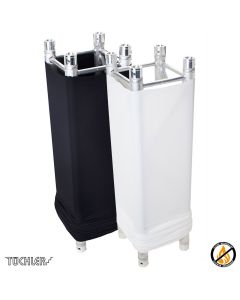
-
Suspension for truss TX34more...
TX34-ABH
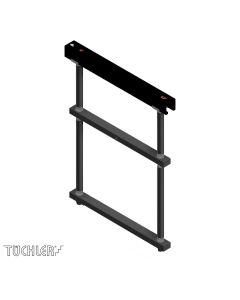
-
TRUSS TX33 STRAIGHTmore...
TX33-S
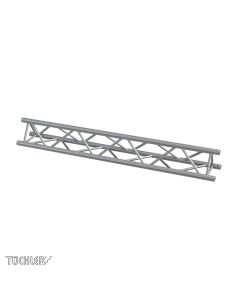
-
TRUSS TX33 CORNER 45° - 2 WAY - HORIZONTALmore...
TX33-C19
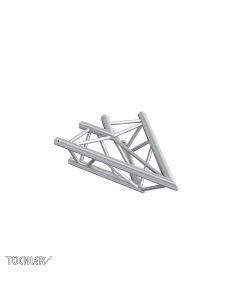
-
TRUSS TX33 CORNER 60° - 2 WAY - HORIZONTALmore...
TX33-C20
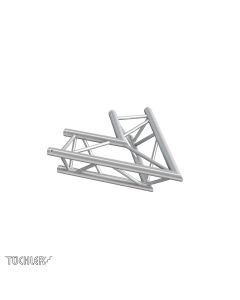
-
TRUSS TX33 CORNER 90° - 2 WAY - HORIZONTALmore...
TX33-C21
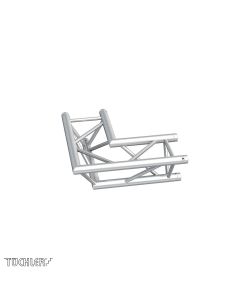
-
TRUSS TX33 CORNER 120° - 2 WAY - HORIZONTALmore...
TX33-C22
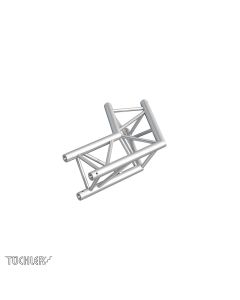
-
TRUSS TX33 CORNER 135° - 2 WAY - HORIZONTALmore...
TX33-C23
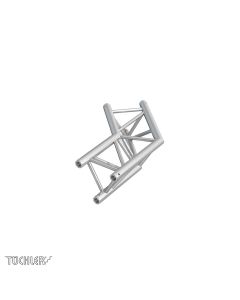
-
TRUSS TX33 CORNER 90° - 2 WAY - VERTICAL - APEX UPmore...
TX33-C24
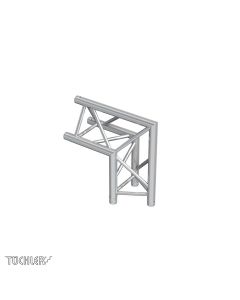
TRUSS TX33 CORNER 90° - 2 WAY - VERTICAL - APEX UPper pcs €306.00 €255.00 -
TRUSS TX33 CORNER 90° - 2 WAY - VERTICAL - APEX INmore...
TX33-C25
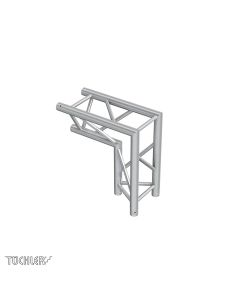
TRUSS TX33 CORNER 90° - 2 WAY - VERTICAL - APEX INper pcs €307.20 €256.00 -
TRUSS TX33 CORNER 90° - 3 WAY - RIGHT - APEX UPmore...
TX33-C31
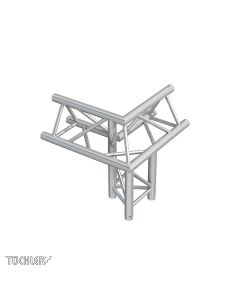
TRUSS TX33 CORNER 90° - 3 WAY - RIGHT - APEX UPper pcs €444.96 €370.80 -
TRUSS TX33 CORNER 90° - 3 WAY - LEFT - APEX UPmore...
TX33-C32
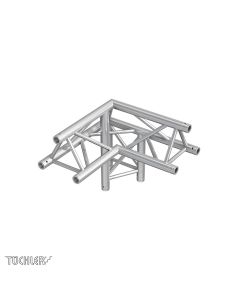
TRUSS TX33 CORNER 90° - 3 WAY - LEFT - APEX UPper pcs €444.96 €370.80 -
TRUSS TX33 CORNER 90° - 3 WAY - RIGHT - APEX DOWNmore...
TX33-C33
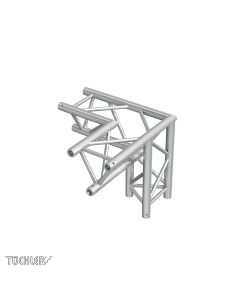
TRUSS TX33 CORNER 90° - 3 WAY - RIGHT - APEX DOWNper pcs €444.96 €370.80 -
TRUSS TX33 CORNER 90° - 3 WAY - LEFT - APEX DOWNmore...
TX33-C34
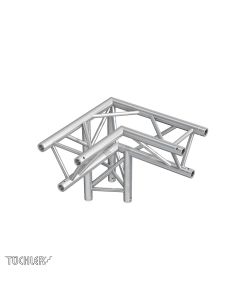
TRUSS TX33 CORNER 90° - 3 WAY - LEFT - APEX DOWNper pcs €444.96 €370.80 -
TRUSS TX33 T-JUNCTION - 3 WAY - VERTICAL - APEX DOWNmore...
TX33-T35
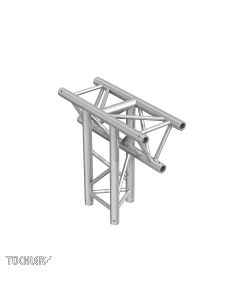
TRUSS TX33 T-JUNCTION - 3 WAY - VERTICAL - APEX DOWNper pcs €435.60 €363.00 -
TRUSS TX33 T-JUNCTION -3 WAY - HORIZONTALmore...
TX33-T36
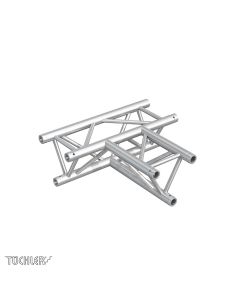
-
TRUSS TX33 T-JUNCTION - 3 WAY - HORIZONTAL - APEX UPmore...
TX33-T37
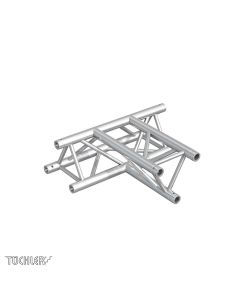
TRUSS TX33 T-JUNCTION - 3 WAY - HORIZONTAL - APEX UPper pcs €425.46 €354.55 -
TRUSS TX33 T-JUNCTION - 3 WAY - VERTICAL - APEX DOWNmore...
TX33-T38
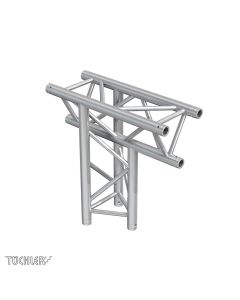
TRUSS TX33 T-JUNCTION - 3 WAY - VERTICAL - APEX DOWNper pcs €401.46 €334.55 -
TRUSS TX33 T-JUNCTION - 3 WAY - VERTICALmore...
TX33-T39
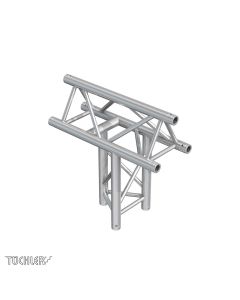
-
TRUSS TX33 CROSS JUNCTION - 4 WAYmore...
TX33-C41
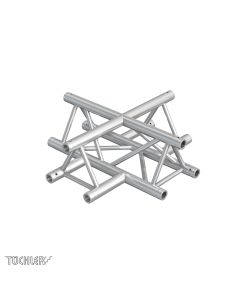
-
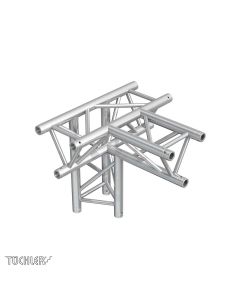
TRUSS TX33 T-JUNCTION - 4 WAY - APEX DOWNmore...
TX33-T42
-
TRUSS TX33 T-JUNCTION - 4 WAY - APEX UPmore...
TX33-T43
-
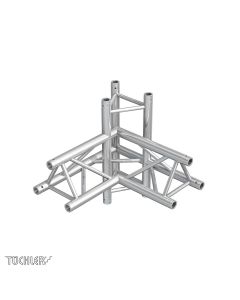
TRUSS TX33 CORNER 90° - 4 WAY - RIGHTmore...
TX33-C44
-
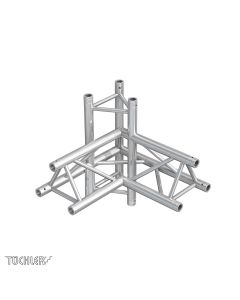
TRUSS TX33 CORNER 90° - 4 WAY - LEFTmore...
TX33-C45
Why are there different types of flame retardants?
Not every flame retardant is suitable for every material. While some products can be used on both natural fibres like cotton and synthetic fibres like polyester, flame retardants often affect material properties in different ways.
Typical changes may include:
- the feel of the material (e.g. stiffer or softer)
- surface texture (e.g. dry or slightly tacky)
- tendency to attract dirt
- colour changes
- visual effects such as gloss, transparency, or texture – for example on Lurex or glitter fabrics
The choice of a suitable product is therefore not based solely on its flame-retardant performance, but also on requirements relating to texture, appearance, further processing, and expected service life.
In industrial applications, additional factors must be considered, such as how the treated material behaves in production or during mechanical processing.
TÜCHLER supports customers in selecting and testing the right flame retardants through application-specific consultation and accompanying test procedures.
Sample test report on the effectiveness of flame retardants
There are no universally valid certificates confirming the effectiveness of flame retardants. Fire protection performance results exclusively from the combination of material, flame retardant, and correct application.
TÜCHLER provides so-called sample test reports for many ECOGARD flame retardants. These reports document that a specific product, when applied by TÜCHLER to a defined material, achieved a particular fire classification according to standardised testing.
Creation of Sample Test Reports for Flame Retardants
For these reports, typical absorbent materials are treated with an ECOGARD flame retardant at the specified application rate. Examples include:
- Cotton fabrics
- Polyester fabrics
- Blended fabrics (e.g. with Lurex content)
- Paper and cardboard
- Solid wood or plywood (e.g. spruce)
The impregnated samples are then submitted to accredited testing institutes. Testing is carried out according to relevant standards such as EN 13501, EN 13773, DIN 4102, or ÖNORM B1-Q1-TR1.
The resulting test reports are available from TÜCHLER for download or upon request.
Note on the Validity of Sample Reports for Flame Retardants
A sample test report confirms that a specific material treated with an ECOGARD flame retardant achieved a certain fire classification according to a given standard. It therefore demonstrates the general suitability of the product for that type of material.
However, this does not guarantee that other products or objects made from the same or similar material will automatically achieve the same fire classification after identical treatment. The actual effectiveness depends on factors such as:
- the precise material composition
- surface structure, finish, and processing
- absorbency
- the selected application method and applied quantity
For safety-critical applications or those requiring regulatory approval, TÜCHLER recommends conducting a preliminary test or, if needed, arranging individual testing through an accredited laboratory.
Flame Retardants, Authorities, and General Building Authority Test Certificates (abP)
Flame Retardants – Common Areas of Use
In most cases, flame retardants are used for:
Curtains and textiles
- Decorative and stage materials
- Scenery, shaped materials, and temporary installations
These applications do not qualify as construction products under building regulations and do not require a building authority approval or abP.
Key Points for Users and Authorities
- An abP is not an approval for flame retardants
- An abP does not replace a fire safety certificate or fire protection repor
- The DIN 4102-B1 classification always refers to the specific tested material, not to the flame retardant itself
abPs are valid only within Germany and do not apply across Europe
What really matters
For practical evaluation, what counts is material-specific verification of flame retardancy – such as a test report confirming DIN 4102-B1 or equivalent EN classifications. The existence of an abP is not the determining factor in assessing a flame retardant’s effectiveness.
For a detailed legal and technical explanation, see our reference article on
“General Building Authority Test Certificate (abP)”.
Application: Methods and Application Rates
Impregnation with flame retardants is carried out using different methods depending on the material and the intended application. Common techniques include spraying, dipping, brushing, or pouring, the latter often used for large or irregularly shaped materials such as straw bales.
Regardless of the chosen method, it is essential that the flame retardant penetrates the material rather than remaining only on the surface. A light misting or superficial wetting is not sufficient for effective flame retardant treatment.
The required application quantity depends on the absorbency of the material. The goal is thorough saturation so that the material absorbs and retains the flame retardant. In practice, this means the impregnation process should continue until the material is visibly saturated—ideally just before any dripping occurs.
Only with an adequate application quantity can reliable flame-retardant performance be achieved.
Self-Test: Assessing Flame Retardancy After Treatment
A standard-compliant verification of flame retardancy can only be provided through testing at a certified laboratory. However, for many applications, an indicative self-test can be helpful in assessing the basic effectiveness of the flame retardant treatment.
A common self-test involves exposing the treated material to an open gas flame (e.g. a standard lighter with a flame length of approx. 3–4 cm) and observing the ignition behaviour.
Details on the safe execution, interpretive value, and limitations of such self-tests are thoroughly explained in our application and safety guidelines for flame retardants.
Our Services: Consultation, Impregnation, Testing, and Communication with Authorities
TÜCHLER offers comprehensive services related to the selection, application, and testing of flame retardants. The goal is to provide a technically suitable and verifiable solution for each material and application to achieve the desired fire protection properties.
Our services include:
- Technical consultation for selecting suitable flame retardants, tailored to the type of material, area of application, and desired material properties
- Implementation of impregnation trials and indicative preliminary tests to assess the basic effectiveness on the specific material
- Issuance of certificates for professional impregnation carried out by TÜCHLER, to document correct application
- Organisation and communication with accredited testing institutes, including preparation, submission, and supervision of the testing process
- Coordination with authorities in advance of planned measures, for example regarding fire protection requirements or approvals
- Support for industrial clients during operational trials, including assistance with the integration of flame retardants into production processes
Standardised Fire Tests: Time Requirements and Effort
For certified verification of flame retardancy, the material treated with an ECOGARD flame retardant is submitted to an accredited testing laboratory. The time required to issue a test certificate depends on the applied standard and the lab's current capacity:
- EN 13773 (textiles): typically around 2–3 weeks
- EN 13501 (construction products): often several months, approx. 3 months in practice
Please note: Costs for impregnation, sample preparation, and lab testing are incurred even if the targeted fire classification is not achieved. Preliminary tests and the correct product selection significantly help reduce this risk.
What Does Flame Retardant Protection Do?
Flame retardant protection is designed to prevent the outbreak of a fire. It acts during the earliest phase of a fire and is intended to stop common ignition sources—such as open flames, heat from lighting, or electrical faults—from igniting a material and starting a fire.
In public and commercial settings, normally flammable or easily ignitable materials are therefore not permitted. Materials must either be inherently flame-retardant or made flame-retardant through appropriate treatment to effectively prevent ignition and fire development.
Flame retardants are not intended to stop a fully developed fire or to prevent deliberate arson. Their sole purpose is preventive fire protection.
A detailed explanation of how flame retardants work, their limitations, and the correct technical terminology can be found in the TÜCHLER Lexicon.
See the lexicon entry: What is the purpose of flame retardant protection?
How Long Does a Flame Retardant Treatment Last?
A flame retardant treatment remains effective as long as the treated material is neither washed nor exposed to heavy moisture.
If the material becomes thoroughly soaked—where water penetrates through and drips off—the flame retardant can be washed out or redistributed within the material, potentially resulting in partial or complete loss of flame retardant effectiveness.
Washing processes completely remove the flame retardant effect.
Fire Protection Terms – Briefly Explained
In the context of fire protection, terms such as flame-retardant, fire-resistant, non-combustible, or flame-protected are often used. However, these terms have distinct technical meanings.
Flame-retardant (schwer entflammbar) is a normatively defined term from DIN 4102 and corresponds to building material class B1. This designation may only be used if there is a valid test certificate.
Fire-resistant (schwer brennbar) is a commonly used umbrella term, mainly associated with European fire classes. It is used to describe the fire safety properties of materials in classes B or C (EN 13501) or class 1 or 2 (EN 13773) in a simplified and accessible way, without directly citing a specific classification. The term itself is not a defined standard.
Non-combustible (unbrennbar) refers to materials that do not contribute to fire load, such as those classified as A1 or A2 under EN 13501. This is an inherent material property and cannot be achieved through impregnation.
Terms such as flame-protected (flammgeschützt) or non-flammable (unentzündlich) are not technical terms and have no normative meaning.
A detailed and normatively accurate explanation of these terms can be found in the TÜCHLER Lexicon.
See the lexicon entry: Understanding Fire Protection Terminology