
Initial situation & challenge
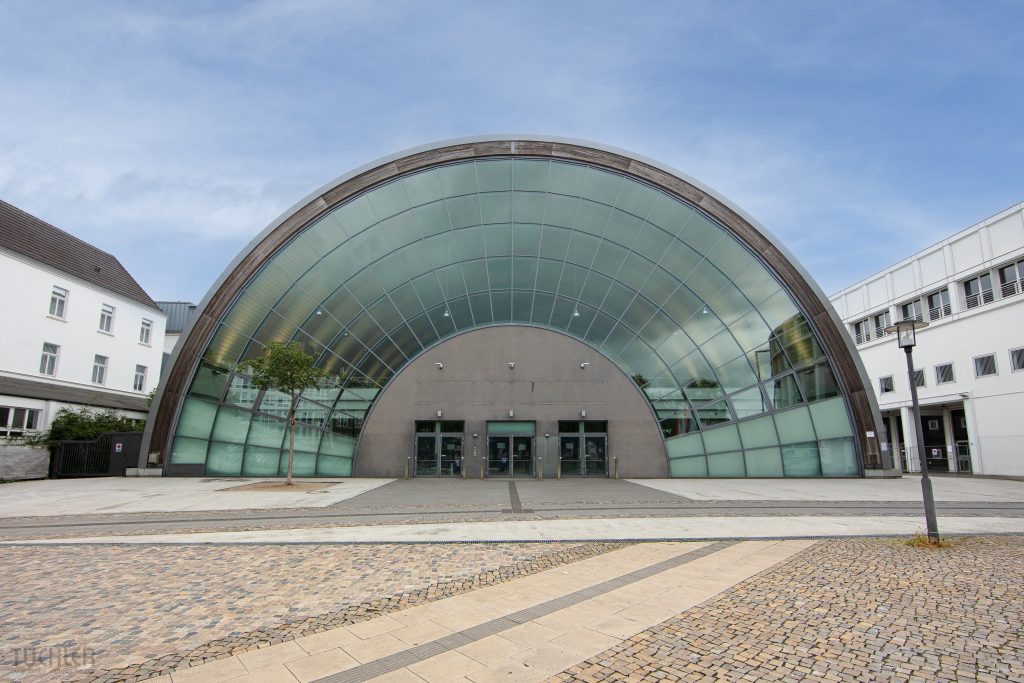
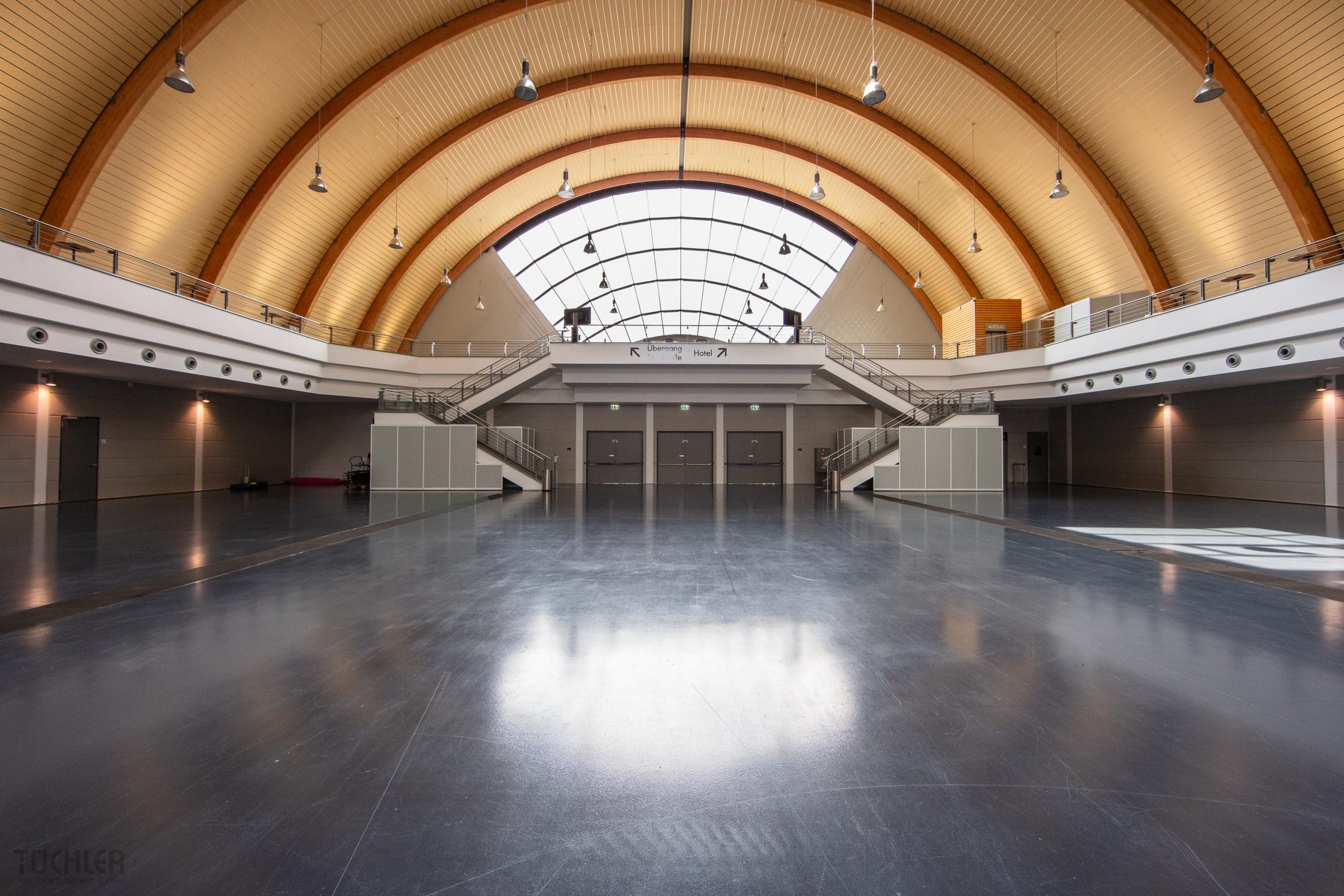
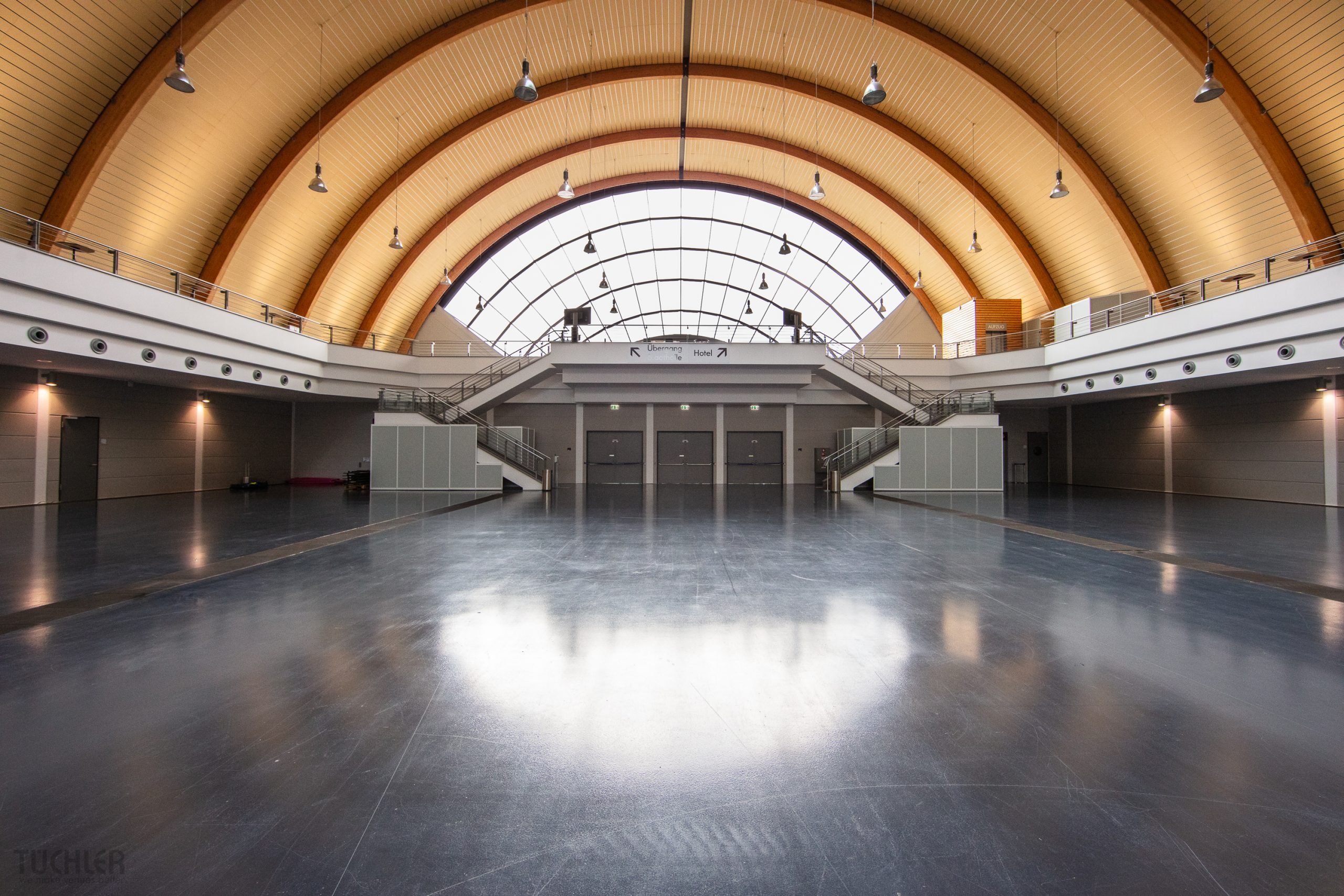
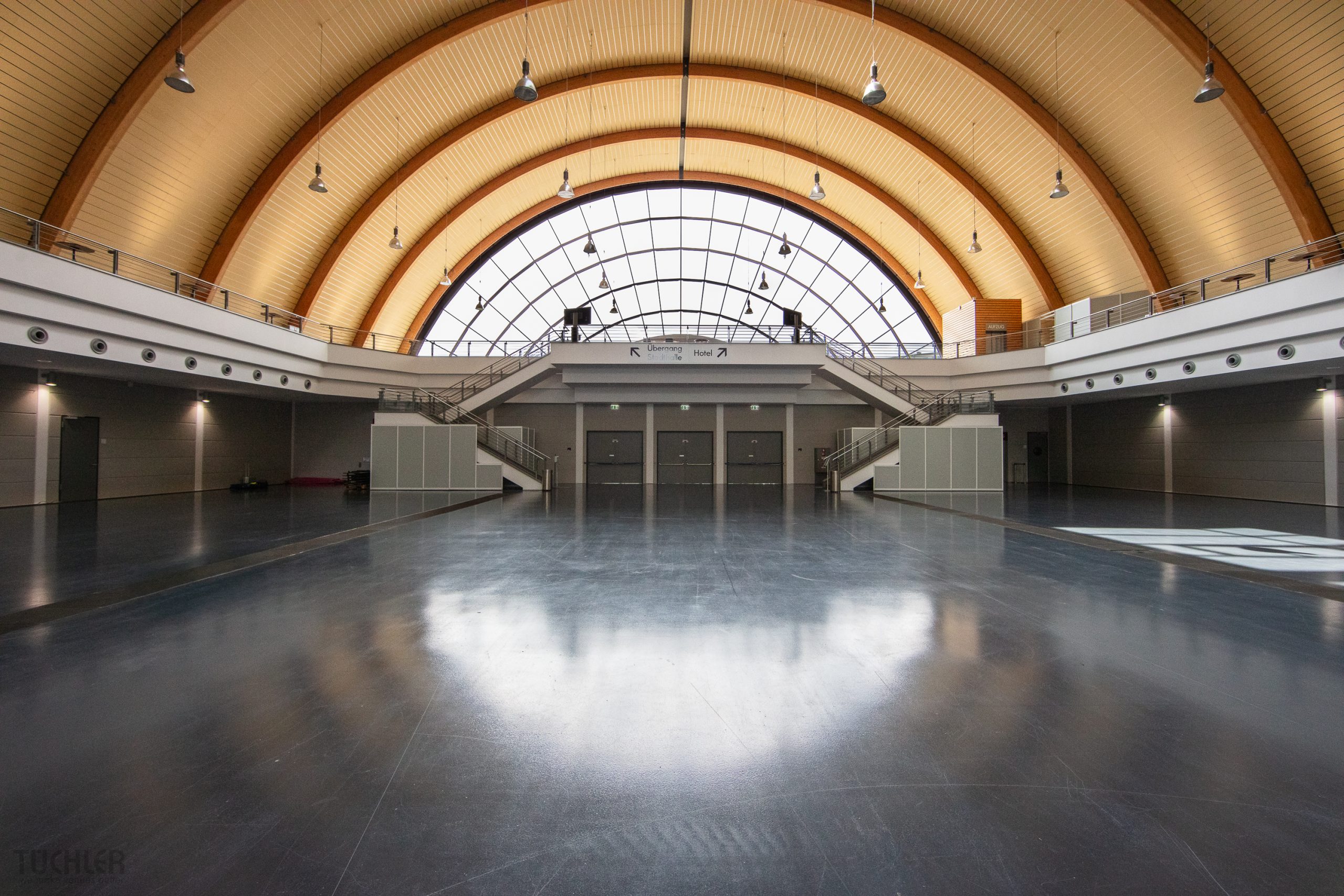
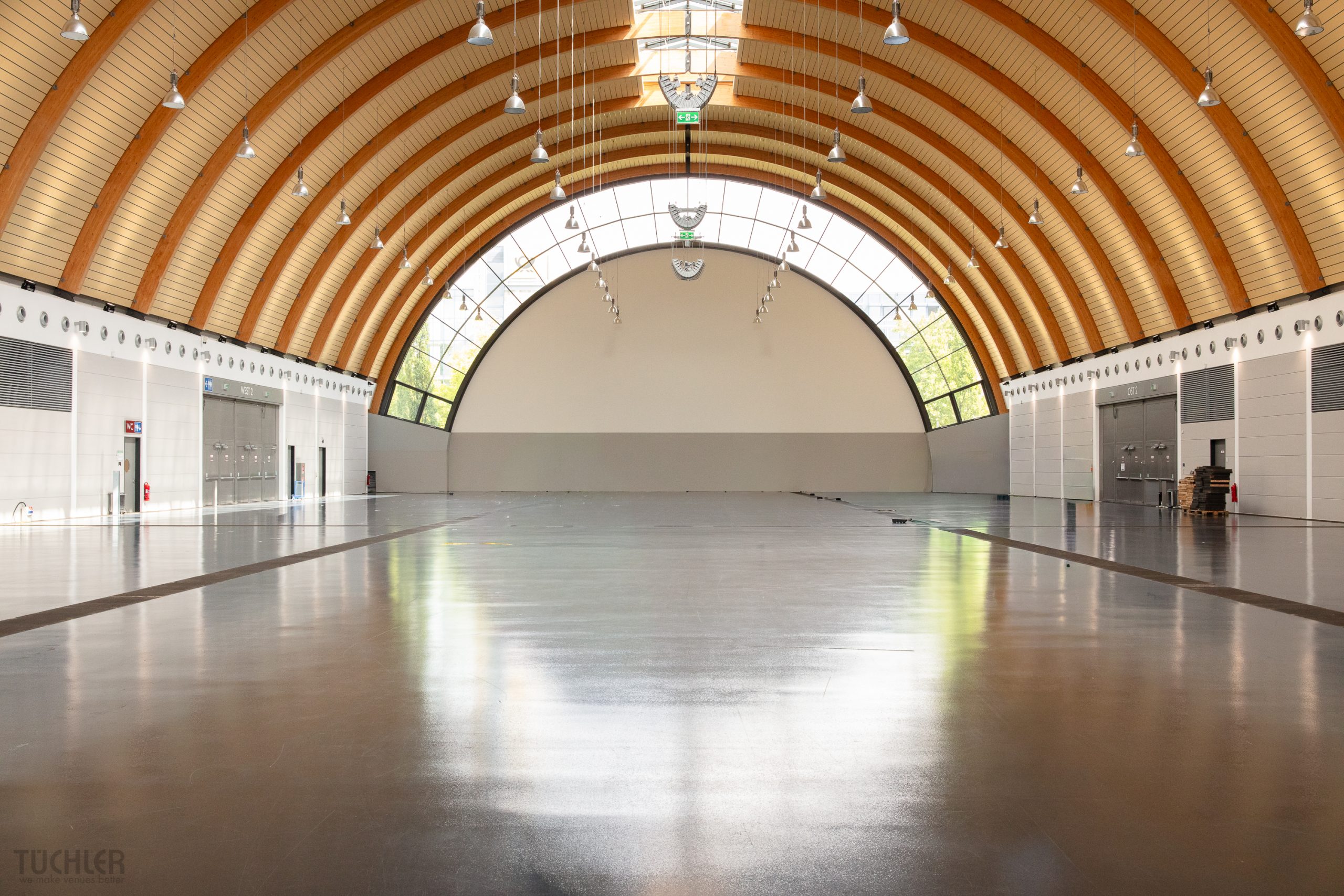
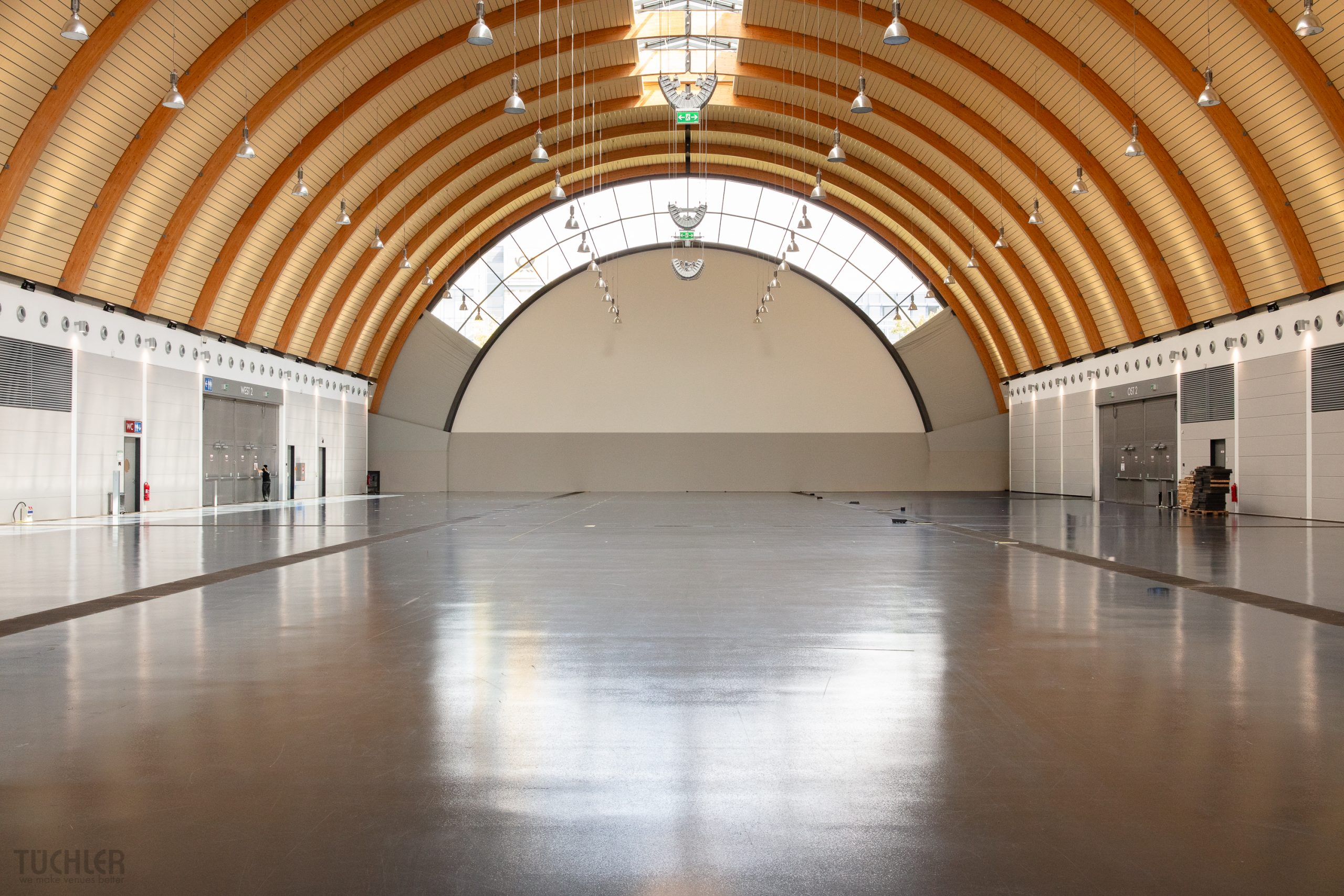
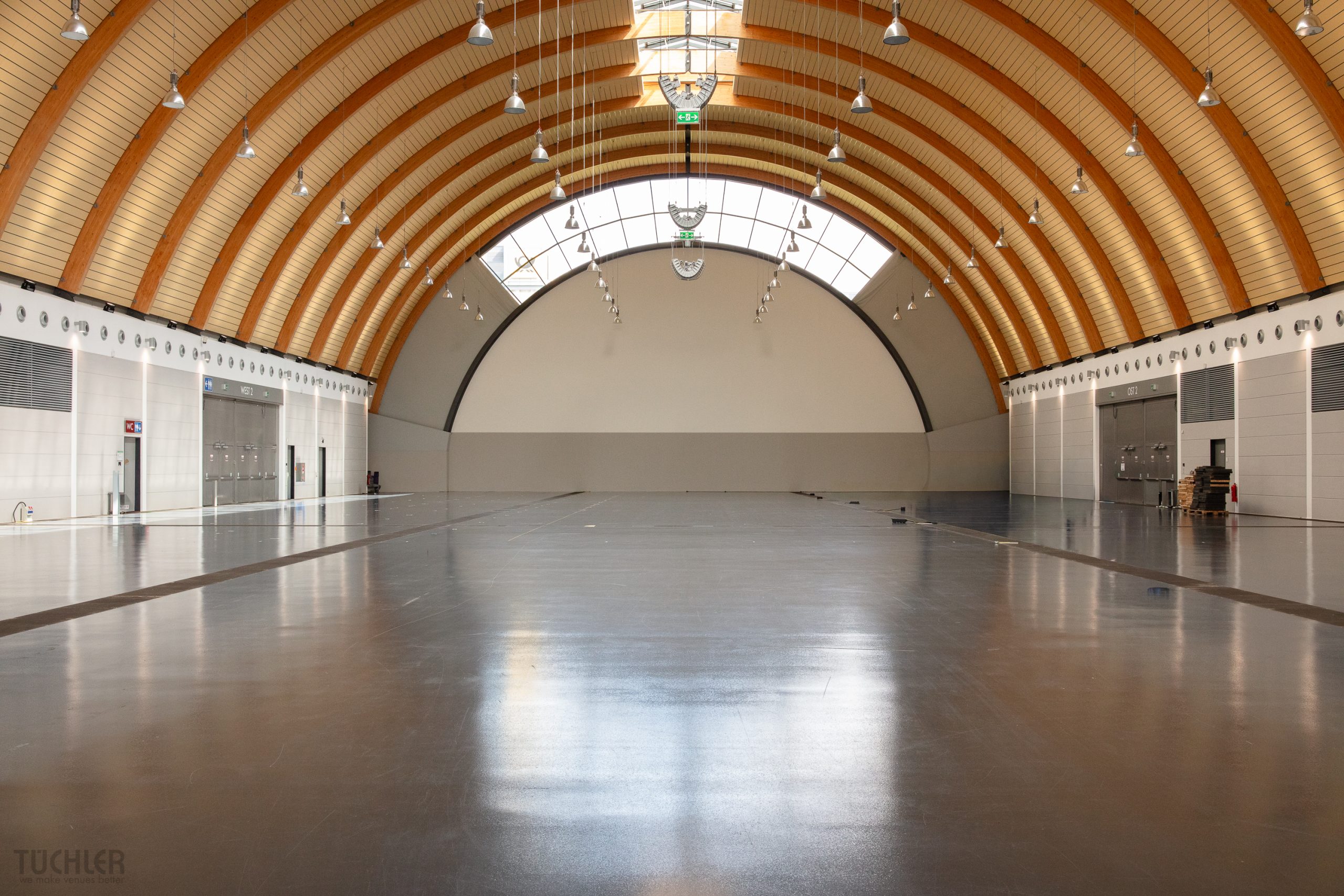
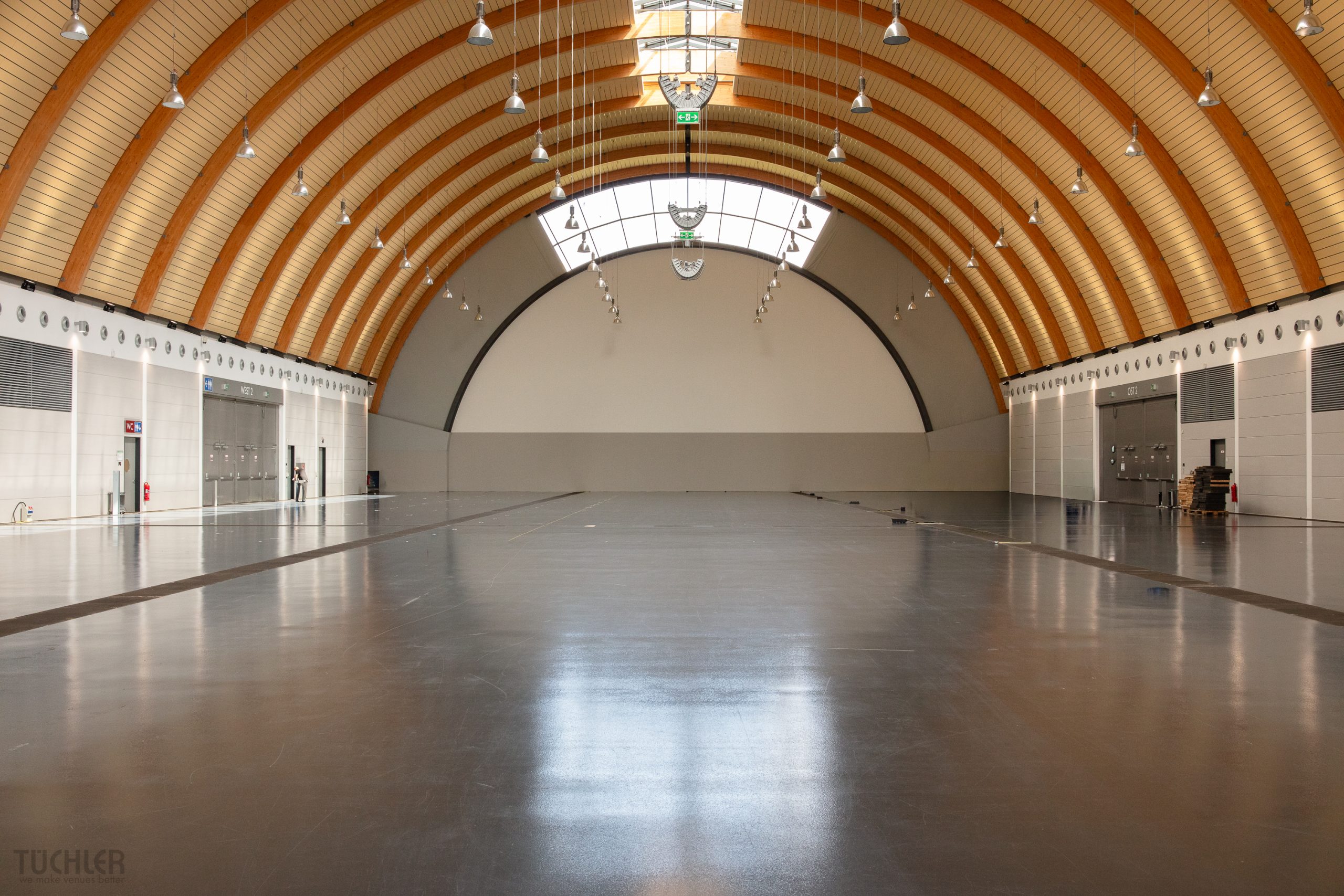
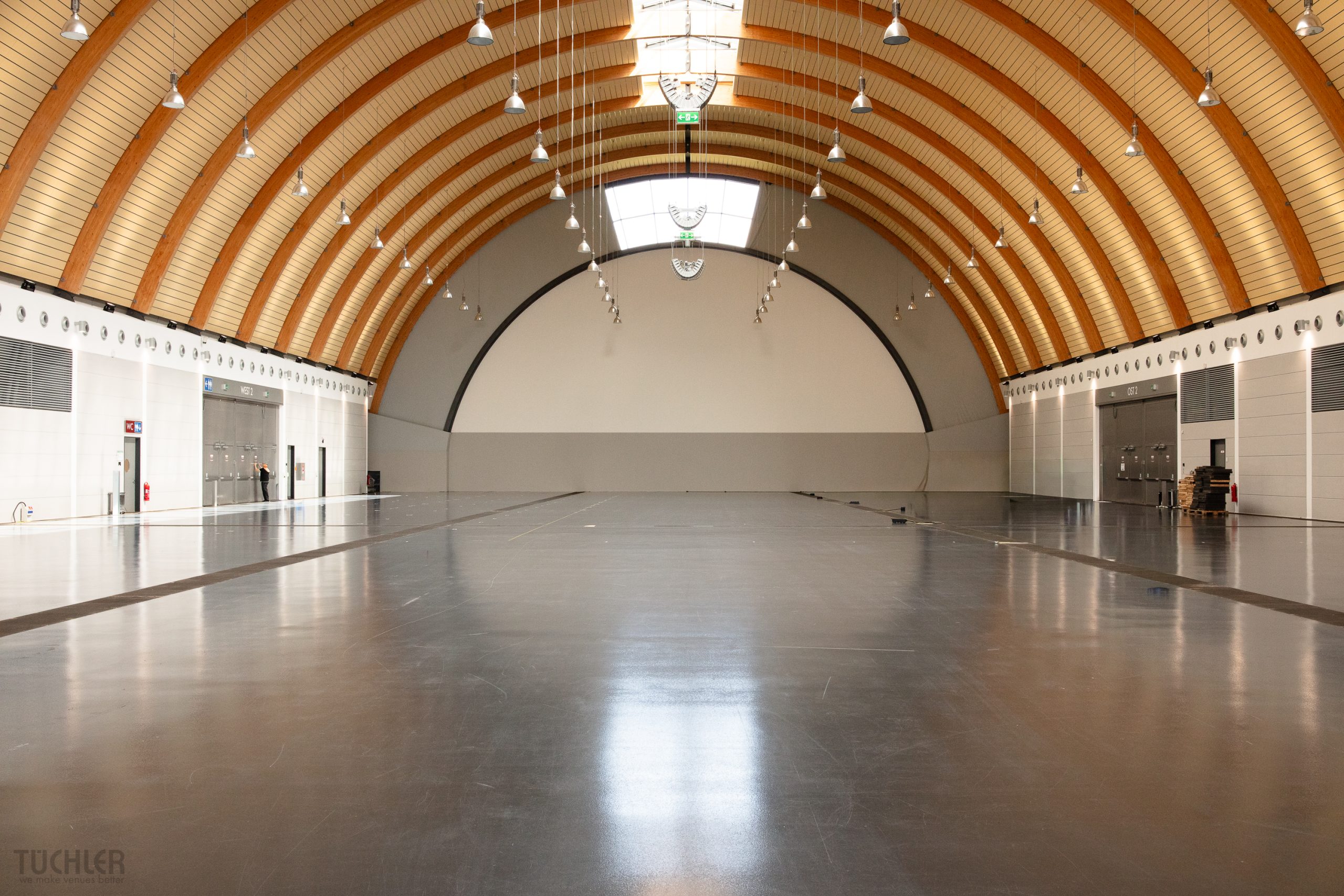
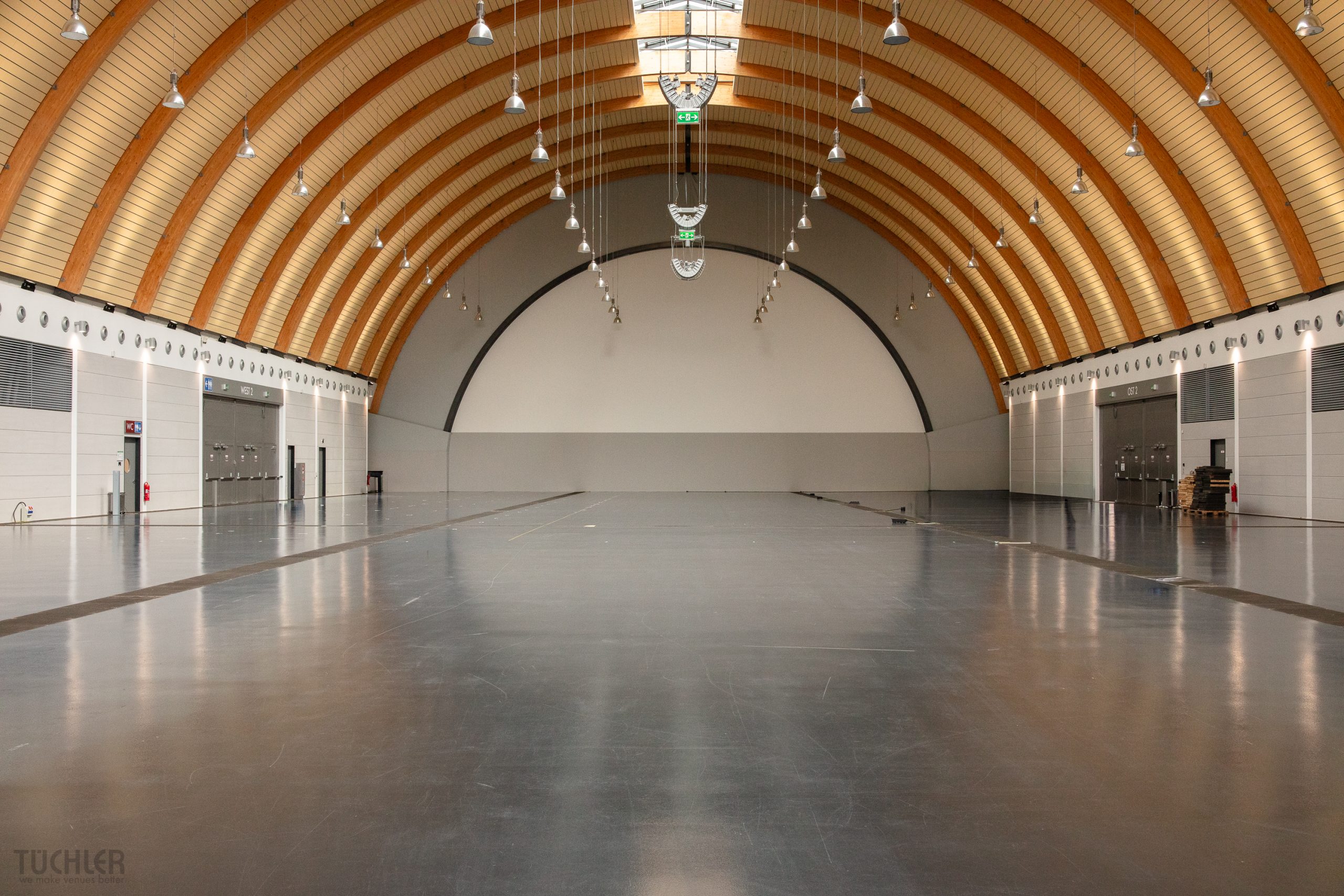
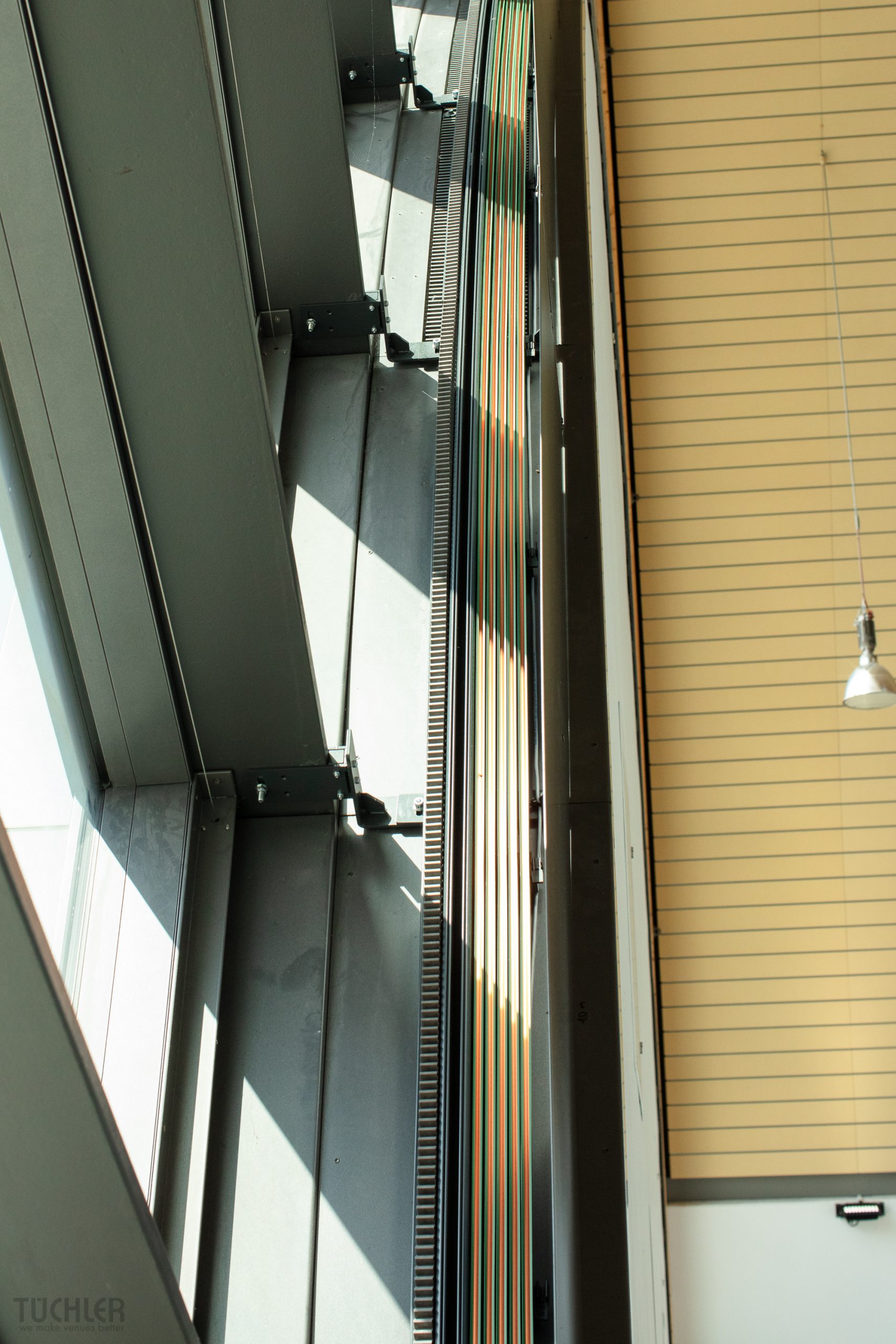
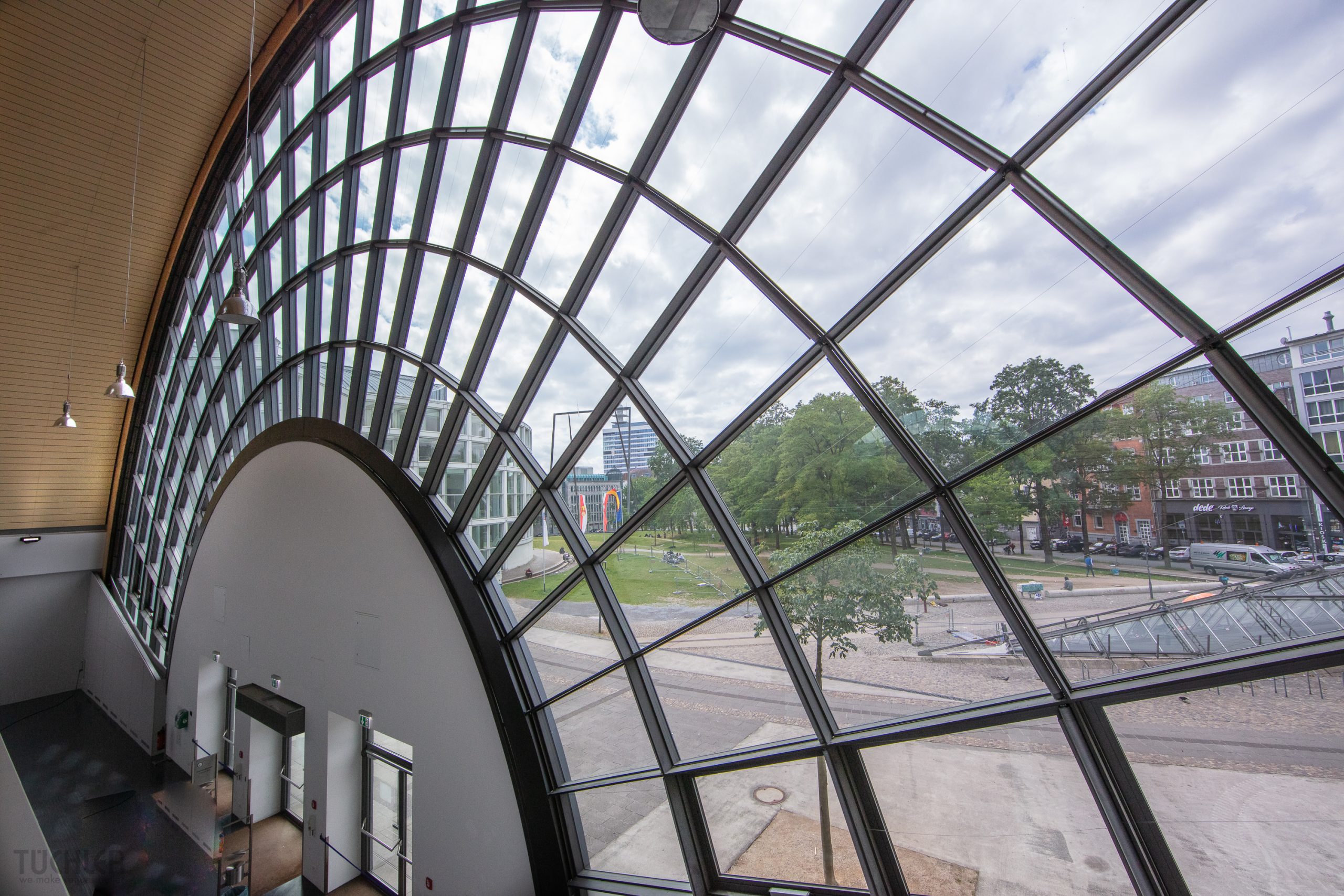
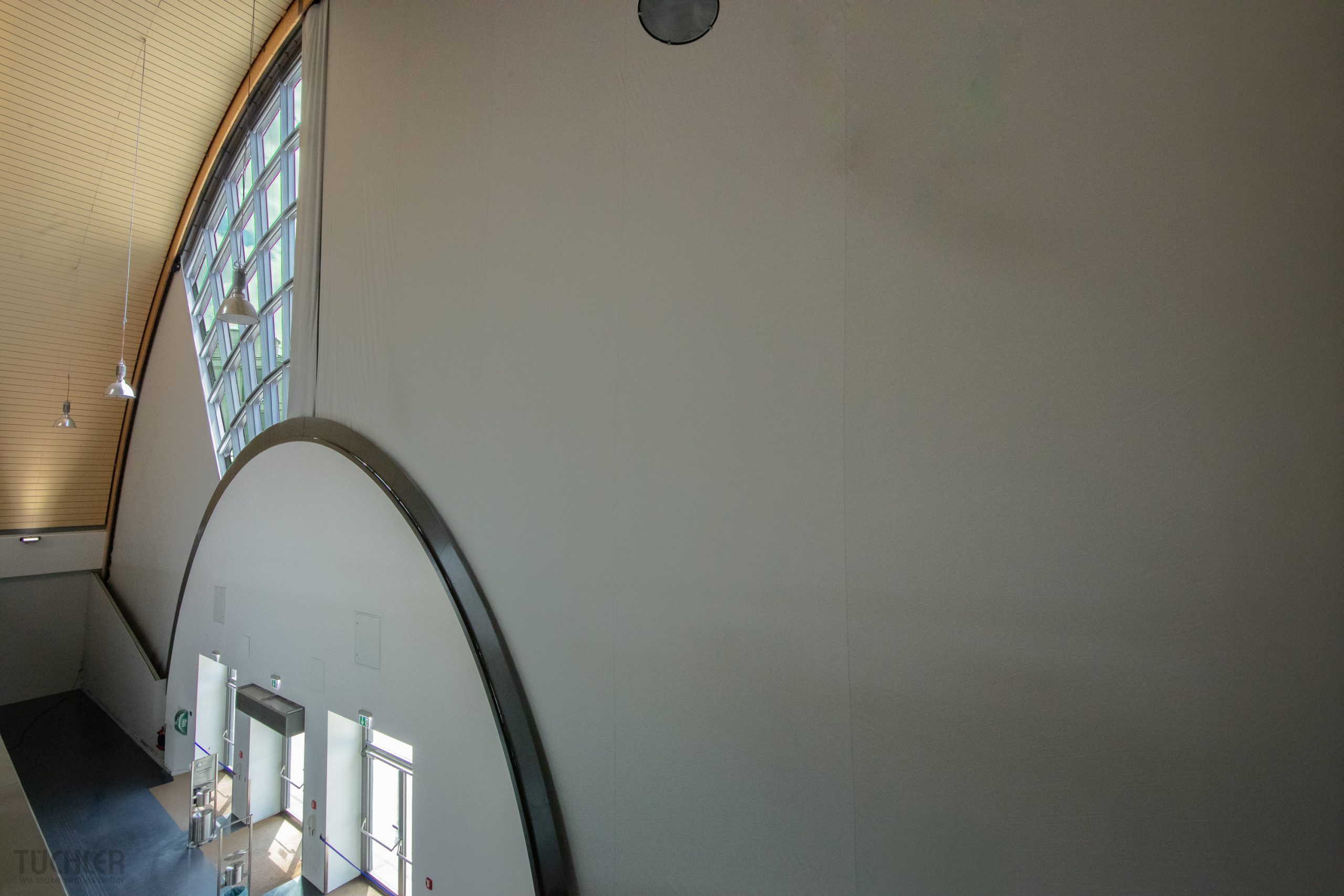
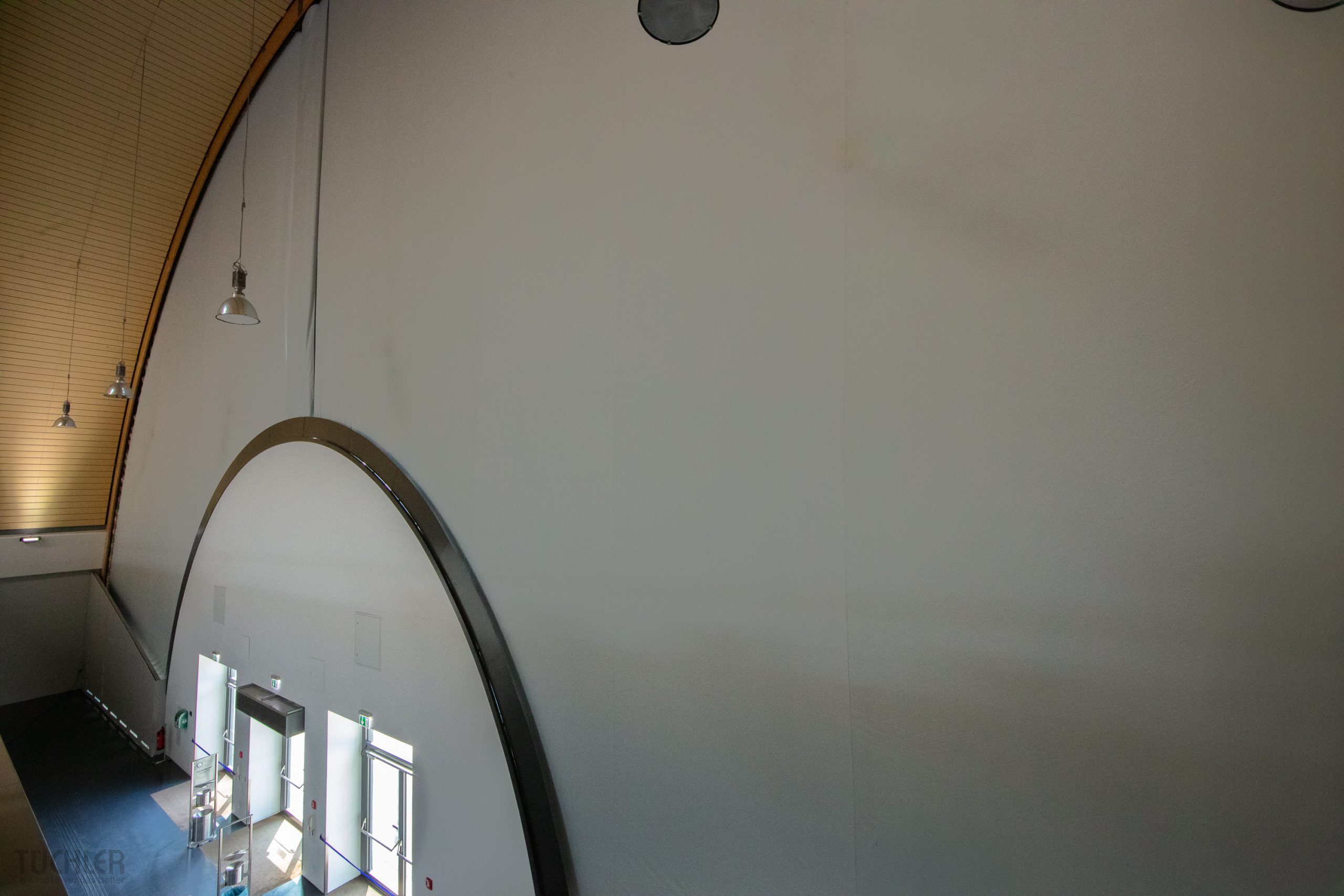
The hall is designed as a split cylinder, with its flat side resting horizontally on the ground. The northern and southern end walls are each fitted with semi-circular façades incorporating ring-shaped glass bands.
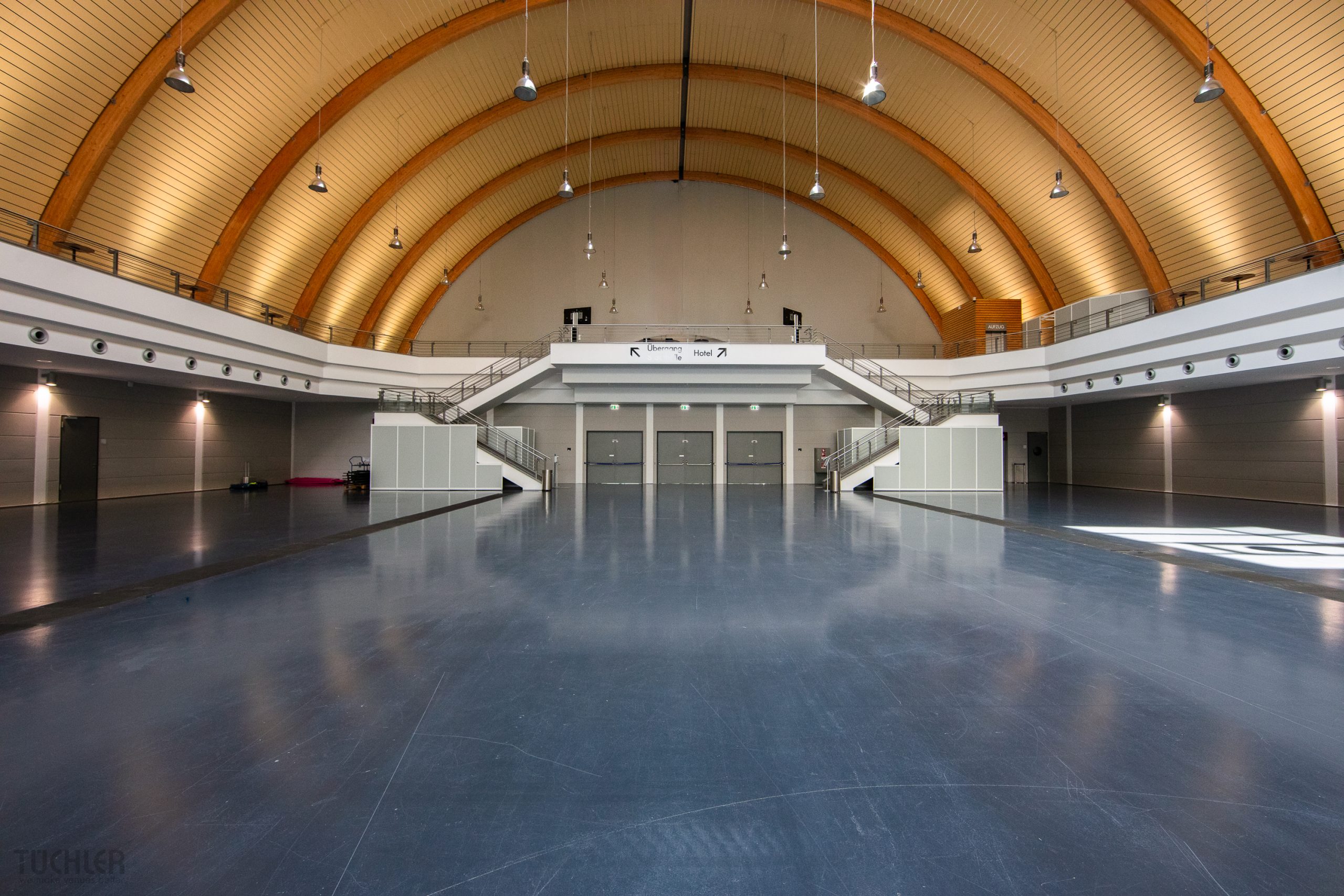
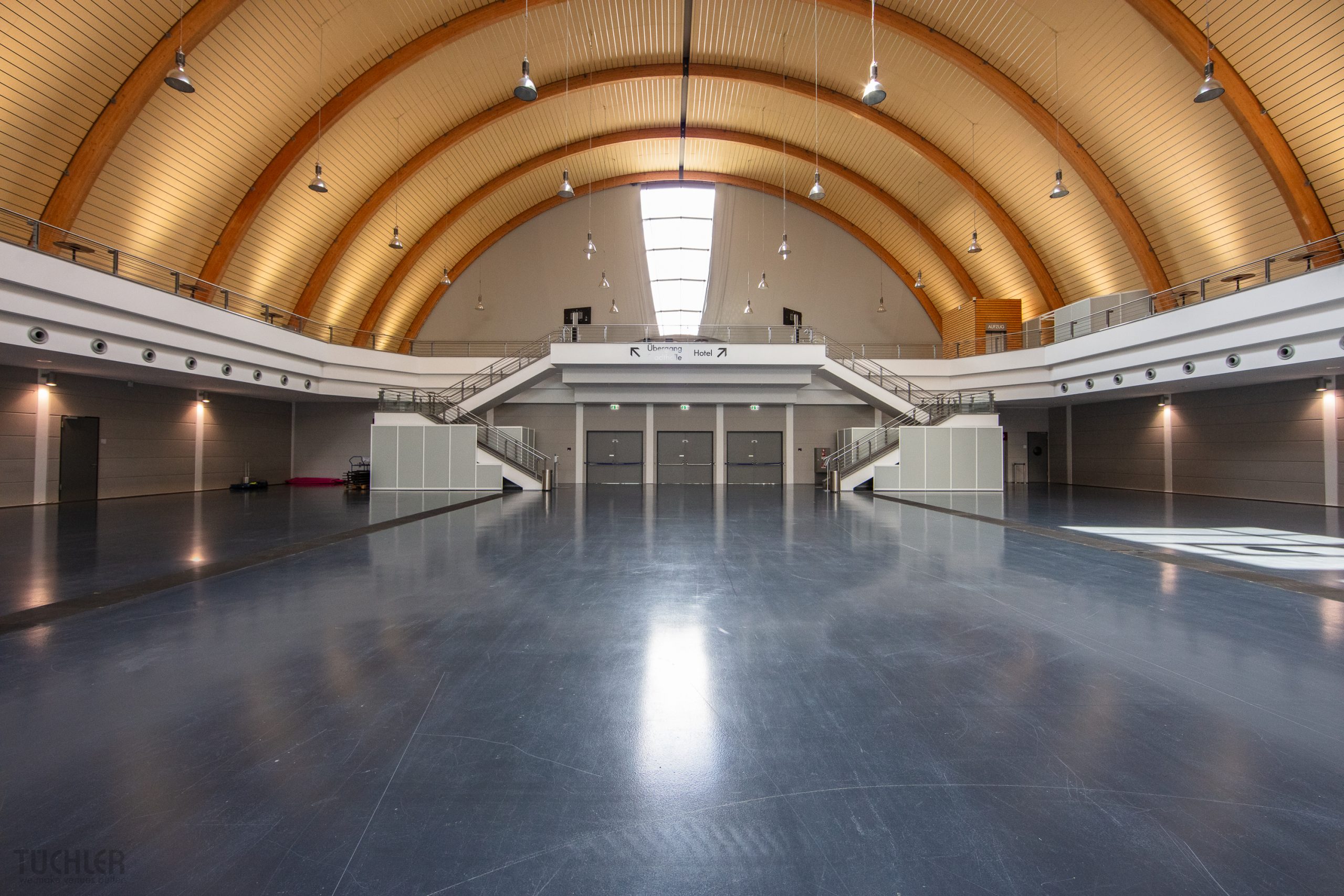
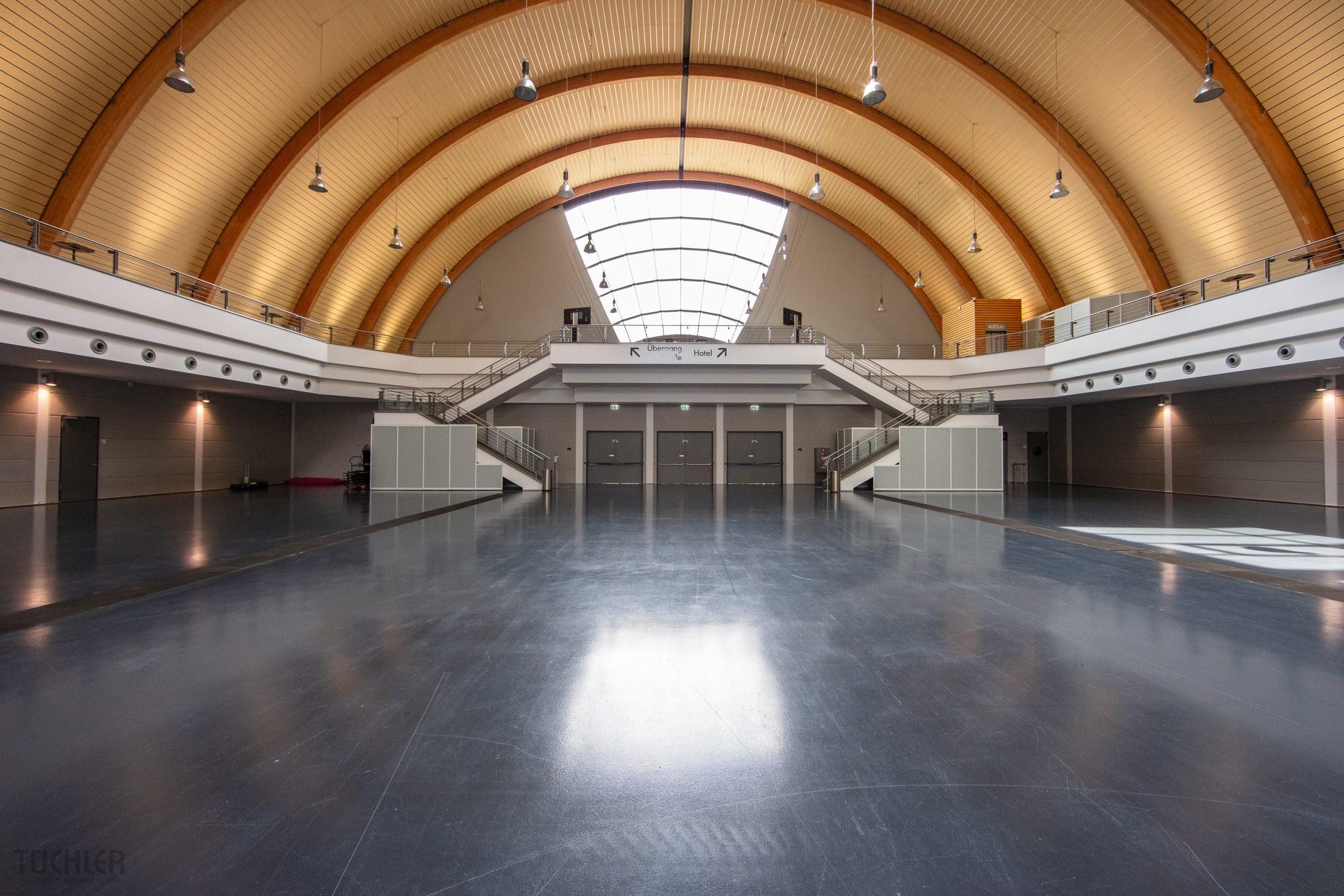
With an internal radius of more than 19 metres, the hall reaches a corresponding interior height. On the north side, the glass façade runs around the end wall with a width of approximately 4 metres, while the south side features a glass band approximately 11 metres wide.
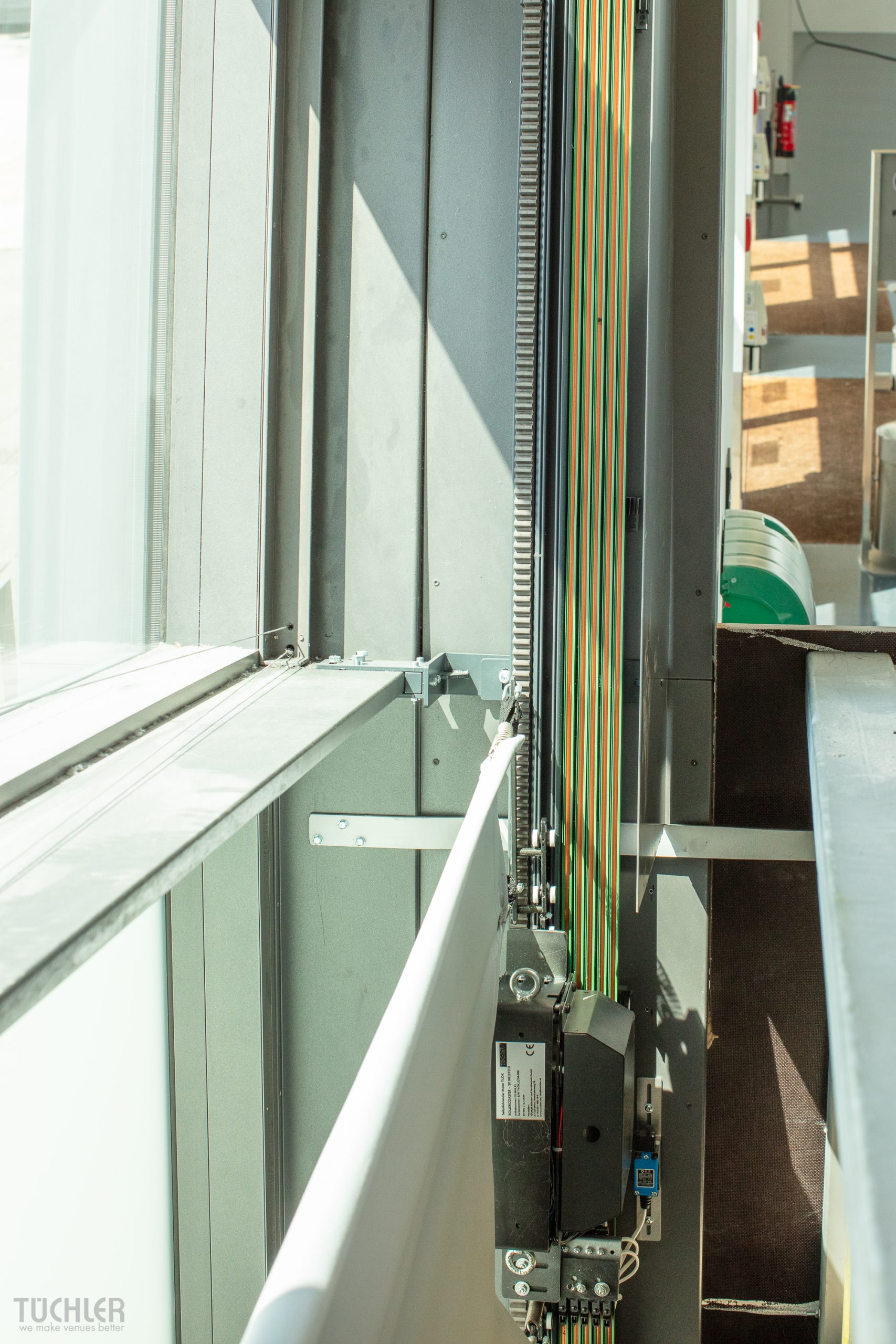
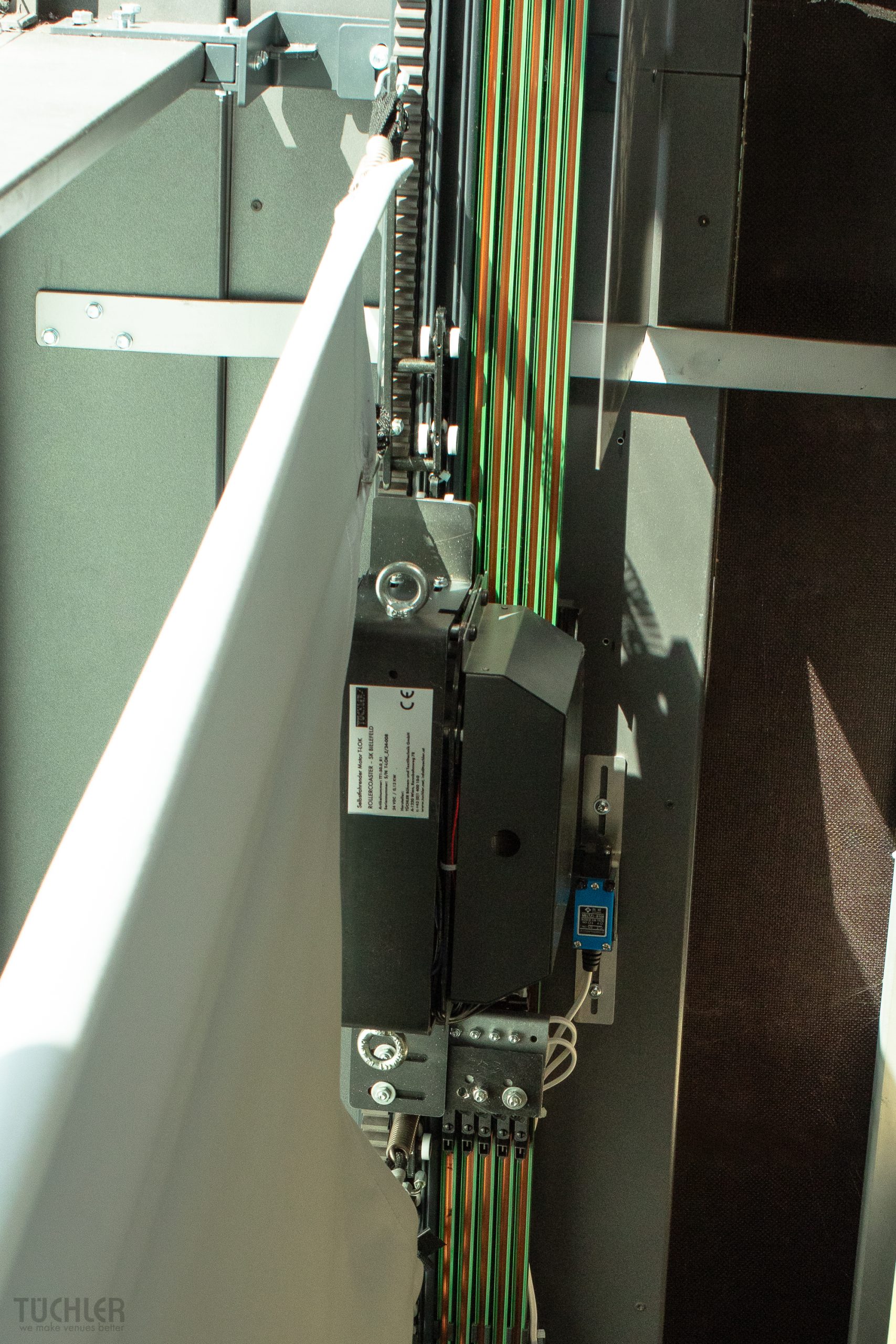
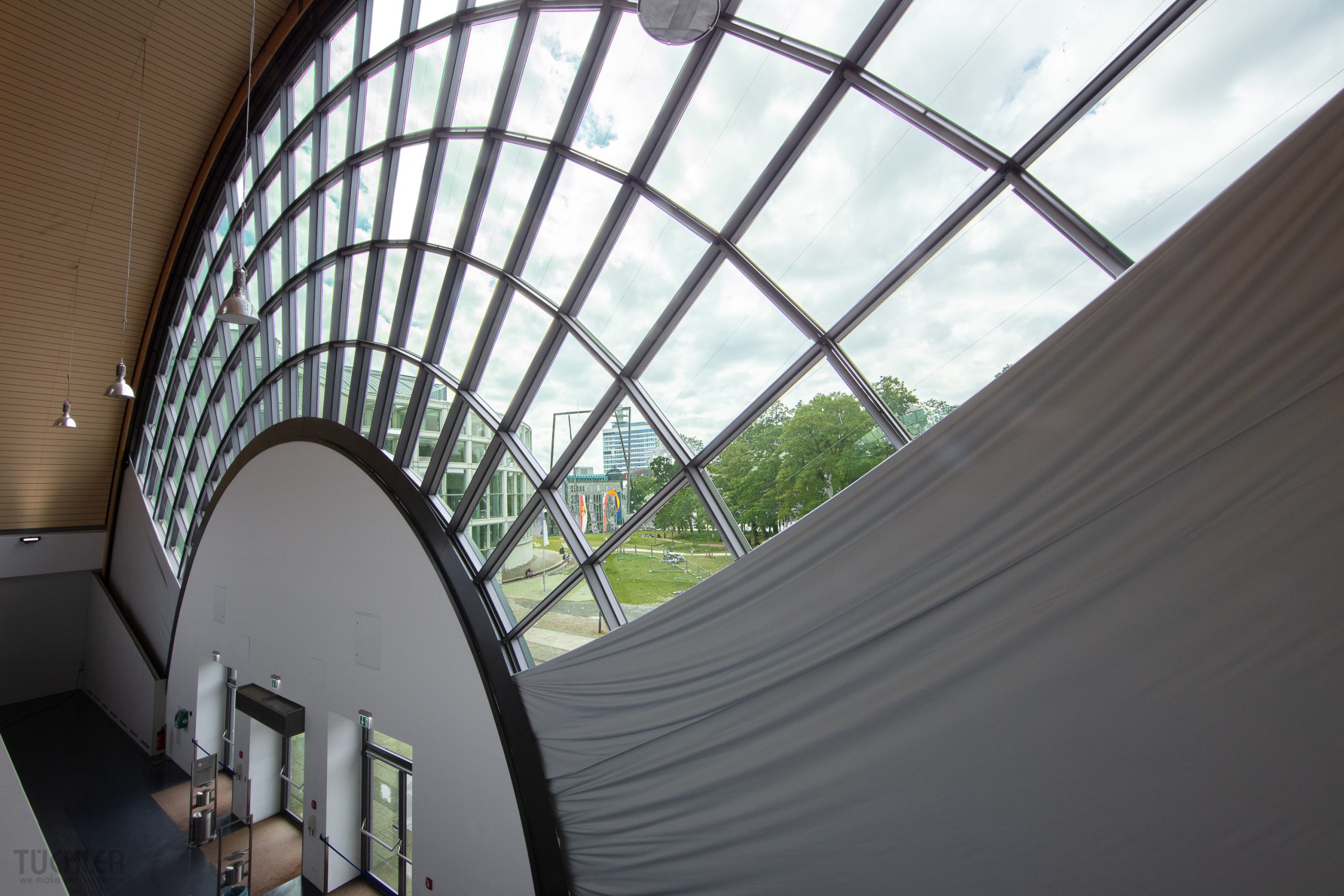
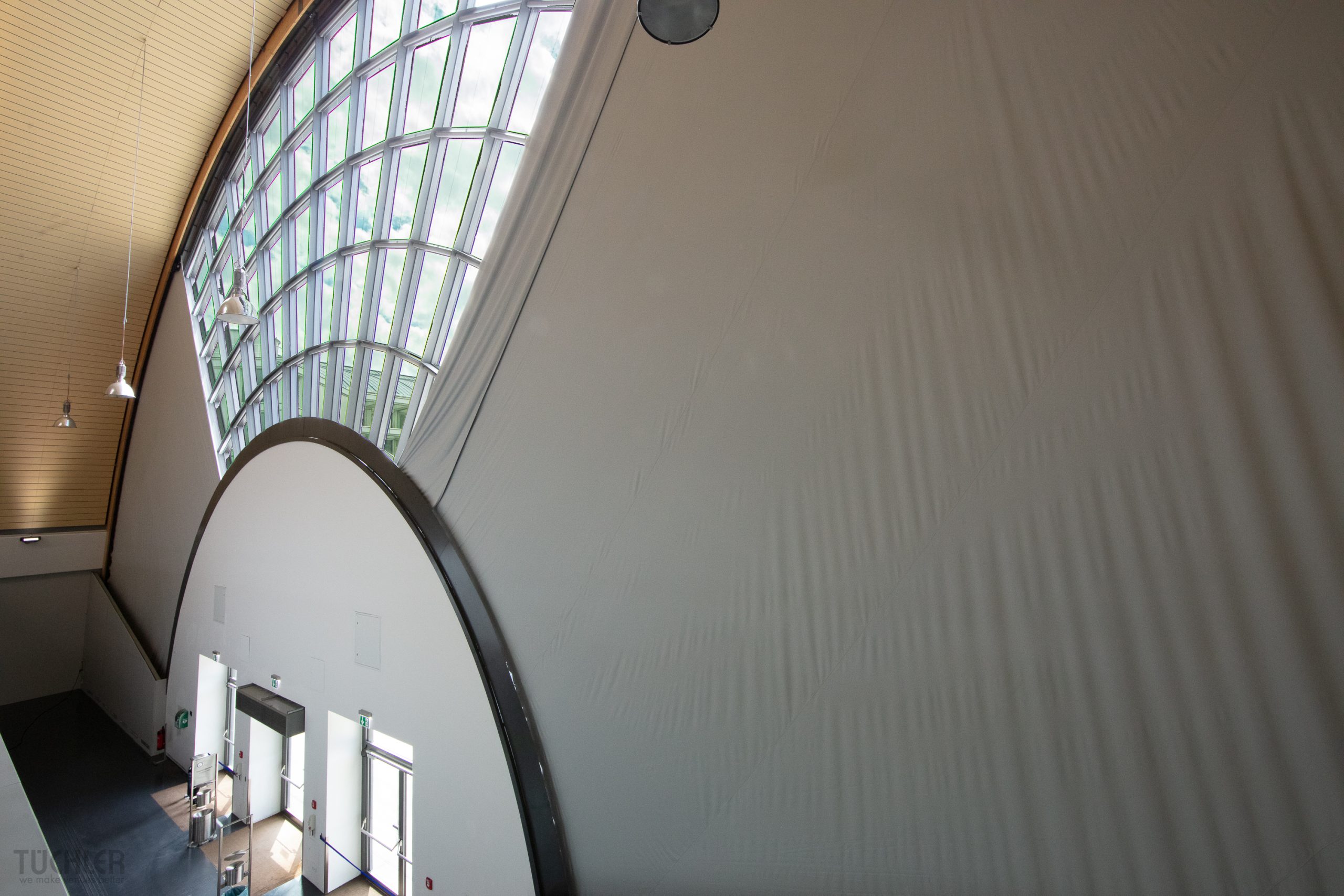
Although these curved, large-scale glass façades enable optimal use of daylight, they previously made complete and flexibly controllable blackout conditions difficult to achieve – a clear disadvantage for projections, light shows or stage productions. On the north side, manually suspended fabric panels were used, requiring significant time and staffing resources. The south side was equipped with roller blinds, which, however, did not achieve full blackout. The existing solutions were therefore neither efficient nor suitable for the varying requirements of event operations.